A Future Classic? C4 Cactus is pure Citroen for modern roads

Fri, 12 Jun 2026
Back in the good old days, car manufacturers were able to get away with flights of fancy, with visionaries leading the charge. Radical takes on design and engineering that sometimes worked and sometimes didn’t were commonplace, but at least weren’t guilty of following the herd.
By the 1990s company mergers and accountants running the show were all too common. Crazy ideas like suspension made out of cheese, or body styling created after consuming too much of the stuff were smacked down swiftly by the holders of the purse strings.
Citroen is a classic example of this. Andre Citroen was chock-full of ideas but the Traction Avant sent the company into bankruptcy. The Citroen 2CV and DS were pioneering vehicles rightly lauded for their brilliance – and then they went bankrupt again in 1974.
The PSA era started well enough with the Citroen GS and CX, but Peugeot’s influence began to iron the quirks, and by the 1990s it was much harder to distinguish Citroens from their sister products.
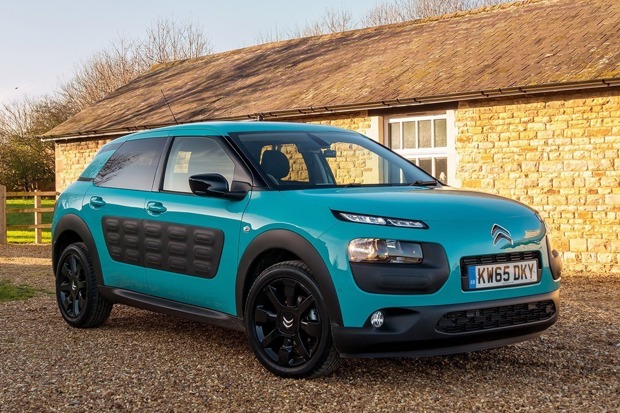
Now we’re not saying the C4 Cactus is anything like as singular or game-changing as the DS or 2CV, but for something created 50 years on from the last ‘pure’ Citroen, it at least has some of the original Gallic spirit about it.
For starters, it doesn’t really fit into a typical bodyshape pigeonhole. It’s vaguely hatch-shaped while riding slightly higher than equivalent hatches, but isn’t quite an SUV either. Essentially it sits on the same platform as the early 2010s C3 and Peugeot 208, but with an inflated body to give you more room on the same footprint.
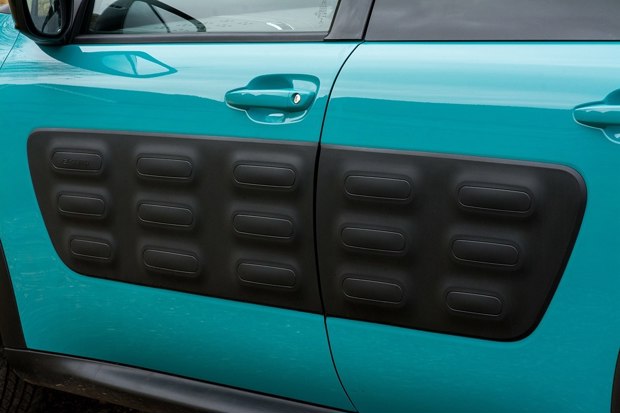
And you can’t talk about the C4 Cactus without going all-in on the AirBumps. A practical solution to the modern scourge of inconsiderate clowns dinging your doors in a car park, the AirBumps were big and bold enough to be effective while being made a feature of the overall design instead of trying to hide them. The post-2018 facelift versions were cowardly shrunk down to little more than glorified sill covers.
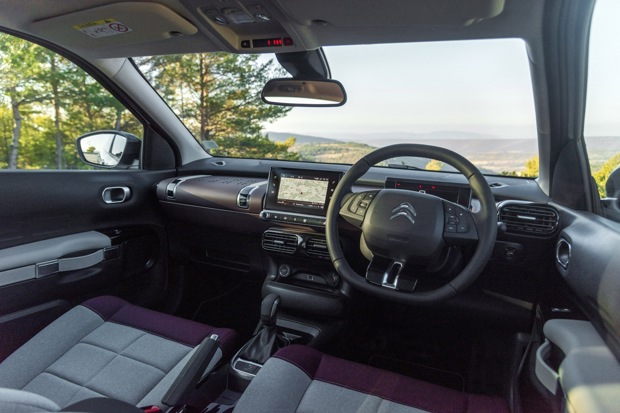
There was more freedom of thought on the inside too. The basic design was simplified, with a slimmed-down dashboard and just two separate pods to house the attractive digital instrument display and infotainment system, but there were numerous detail touches to surprise and delight.
The door handles and glovebox lid were inspired by luggage fastenings. And while the seats look flat they were generously sized and soft so they felt more comfortable than typical compact car offerings.
Mechanically the C4 Cactus was far from radical, with carryover hardware from its conventional siblings, but the execution is what set it apart. Dispensing with any notion of sportiness, the Cactus’s soft suspension and light steering meant it was impressively comfortable and easy to pilot. It took care of you on your journey rather than forcing you to have fun on the way, and was all the better for it.
Here was a practical, useful and low-effort small family car that didn’t disappear into the background next to a dozen other smallish hatches and was refreshingly simple with it. It was blessed with character – at least in its original form – which is always a plus. You only have to look at the regular C4 from the same period to realise how much of an outlier it was.
Today, a C4 Cactus remains a characterful alternative to some coma-inducingly sensible hatchbacks cluttering up the classified ads. There’s also comfort to be had in the fact that the vast majority of the components are also found under several Peugeots and Citroens, so getting things fixed shouldn’t break the bank.
Reliability-wise the main area to consider is electrics. Sat navs, air con systems and starter motors are considered potential problem areas, so a thorough button-pushing exercise is recommended. The C4 Cactus has also had recalls for fuel leaks and bonnet latches, but these issues should have been addressed some time ago.
Engine options are the 1.2-litre PureTech petrol or the 1.6-litre HDi diesel. Wet belt issues with the PureTech are well known, so if petrol is preferred be sure to examine the service history closely and potentially factor in a belt change. While the diesel is likely to be more reliable, DPF issues can affect cars that don’t get enough miles for regeneration.
Buying one won’t tire out your scrolling thumb either. You’re spoilt for choice, which means you can be picky about getting a good colour; we think brighter is better, like Hello Yellow or Jelly Red to contrast with the AirBumps, which were also available in a choice of colours, although few buyers splashed out for it.
And if you’re going for a pre-facelift car Flair spec or above is essential as the basic Feel version did without air conditioning, and the rear windows pivot open rather than rolling down which your back-seat passengers won’t thank you for.
A budget of around £2000 will get you a scruffy example with either engine, but £3500 is enough to secure a later, tidier example with under 100,000 miles and a solid history. We found a 2015 1.6 HDi Flair with under 75,000 miles for just £3850, and at £20 a year to tax and the promise of well over 50mpg it should cost peanuts to run too.
It’s hardly glamorous and won’t set your underwear ablaze on a cross-country blast, but the C4 Cactus is the kind of everyday yet unusual car that will be a future classic, simply because it’s not special enough to be coveted by investors but is different enough to raise a smile.