
A future classic? Honda S2000 is the antidote to modern cars

Fri, 22 May 2026
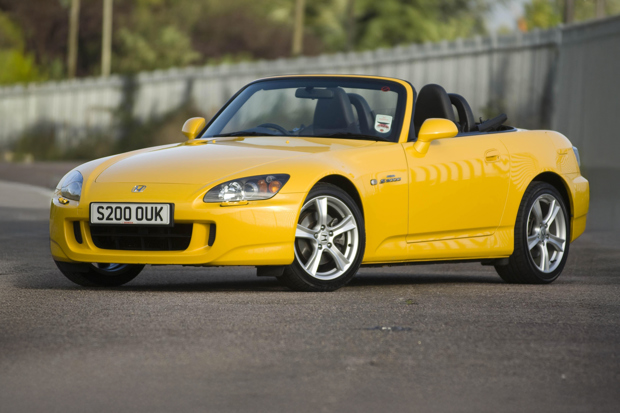
When car manufacturers get out the birthday candles, it usually results in an exceptionally dull press release, or if you’re lucky a social media supercut of all the great cars they don’t make anymore.
Thankfully Honda isn’t like a lot of other manufacturers. Sure, they make some exceptionally sensible and reliable cars that won’t raise your pulse above 60, but they also like to cut loose and give their very talented engineers free reign. This is how the Honda S2000 came to be.
Honda decided to celebrate its 50th anniversary by creating a sports car, taking inspiration from Honda’s first Formula 1 car, the RA270 – also one of the prettiest racing cars ever built – and the Caterham Seven. After showing a concept in 1995, the production version arrived in 1999.
The team behind the S2000 refused to let the marketing department interfere in what was planned to be a pure driving experience. Two seats, rear-wheel-drive and a powerful naturally-aspirated engine was the basic recipe, but Honda went a lot further than that.
It had double wishbone suspension all round for precise control, a limited-slip differential and a six-speed manual gearbox with lightweight components. The engine was mounted behind the front axle to achieve 50/50 weight distribution, but arguably the engine itself is the S2000’s party piece.
A 2.0-litre four cylinder might not seem that exciting compared to the larger capacity six-cylinder units available in German alternatives, but Honda didn’t skimp on the spec. Forged aluminium pistons, the legendary VTEC variable valve timing system and a red line set at a stratospheric 9000rpm resulted in 241PS – the highest output per litre of any naturally aspirated car in the world.
The flip side of this high-revving non-turbo engine was that it was relatively light on torque – just 208Nm – but that just meant you had to work it to get the best out of it. And what a pleasure it was. A deliciously slick short throw gear change allowed you to keep the engine on the boil and although the power tailed off after 8300rpm, you’d keep going to the rev limiter just because you could.
It wasn’t flawless though. The standard electric power steering was quick but not as feelsome as some rivals, and if you were ham-fisted with the steering or injudicious with the throttle it would oversteer with glee. Or terror if you weren’t expecting it.
Later updates altered the suspension, steering and wheel size in order to tame this a little, but it just requires care and precision from the driver, exactly as the engine does. Despite the amount of period technology in the S2000, it has an old-school feel in how it needs to be driven and is all the more special for it.
.jpg?width=620)
When it comes to buying one, the fact that it is a Honda is a reassuring starting point. It’s surprisingly resistant to rust, but unless you know the previous owners very well it’s worth looking out for body damage caused by unexpected trips into the scenery.
Despite its highly strung nature the F20C engine is tough and reliable, with reported faults typically confined to minor issues such as failing sensors or damaged wiring. More of an issue is suspension, where seized bolts or failed bushes can cause headaches.
The convertible top is also hard wearing but the early cars had plastic rear windows, so check for cracks as well as hood operation.
As for buying one, nearly 8000 were sold in the UK so finding one won’t be a challenge. More important then is to look at several examples to get a better understanding of what to look for. Don’t be put off early cars – while they might be a little trickier to drive they’re also the most undiluted version that has its own specific appeal.
Prices start at around £7000 for higher mileage examples and while this is something of a bargain you may need to invest further to bring it back to its best. 2004-on cars (also known as AP2s) are the most in-demand thanks to the revised suspension and start at around £11,000.
The latest cars between 2008 and 2009 have further tweaks and command £1,000 upwards. Honda UK celebrated the end of production with a limited run of GT 100s all finished in Grand Prix White. While these are well-specified, don’t pay over the odds for one – a later car will cost £20,000 or more with low mileage.
As with many future classics that begin to attract buyer interest, the S2000 is something of an antidote to modern motoring, with its high-revving engine and handling that requires the full attention of the driver. We suspect Honda’s 100th anniversary present to itself will be nothing like this.
.jpg?width=620)
