A future classic? Ford Focus: The best hatchback of the 21st Century

Mon, 06 Apr 2026
Sometimes, popularity can overshadow just how good something is. Whether it’s The Shawshank Redemption, The Beatles or hot-buttered toast, familiarity breeds contempt. And as far as we’re concerned, the Ford Focus needs to be added to this list.
It’s worth remembering where Ford was in the 1990s. After utterly dominating the UK sales charts for much of the 1980s with the Fiesta, Cortina, Sierra and Escort, the new MkV Ford Escort arrived in 1990 to a resounding raspberry from the motoring media.
It was a modern but dull design, still used the rough CVH engine which was by then a decade old, had a cheap-feeling interior and was uninspiring to drive - 4.2 turns from lock-to-lock on versions without power steering tells you everything you need to know.
Ford hurried out a facelift by 1992, which was a debatable success, but at least introduced the 16-valve Zetec engine. But there were better times ahead, led by a talented man called Richard Parry-Jones.
Starting at the company in the late 1960s as a trainee, by 1994 he had risen through the ranks to vice president of the Product Development Group and played a key role in what was to follow.
The MkVI Escort arrived in 1995 and while it appeared to be little more than another facelift, a host of changes underneath meant it drove much more sweetly and was more refined too. But in 1998 the first generation Ford Focus arrived and was a generational step forward.
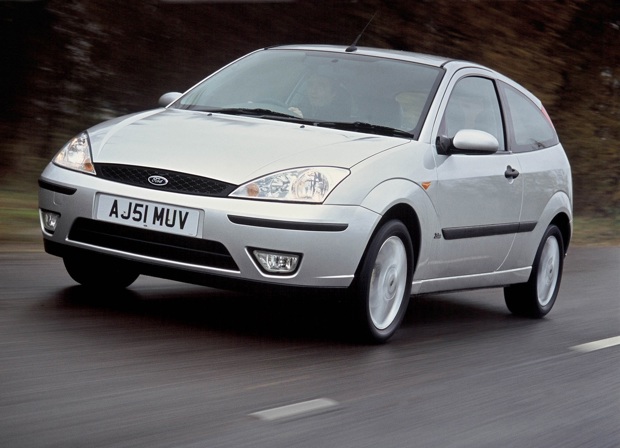
For starters, the exterior design was light years away from the Escort. Another example of Ford’s ‘New Edge’ design language that started with the Ford Ka, it was a bold combination of intersecting curves and straight lines. Not everyone liked it of course, but nearly 30 years on it still looks fresh and interesting.
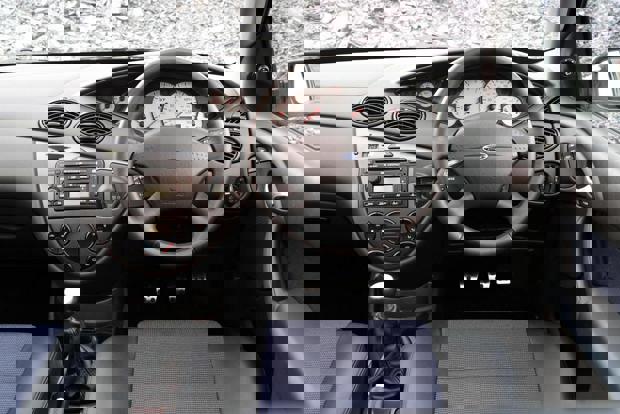
It was the same inside too, with a dashboard that didn’t have a straight line in sight. It wasn’t all about show though.
The boot release button was high up on the dash on the driver’s side so it could be reached through an open window and the bonnet release was behind the Ford oval on the front grille so it could only be accessed with the ignition key - proof that Ford thought hard about how people use their cars and how to make their lives easier.
But what really set the Focus apart was the way it drove. The Zetec petrol engines were already good, but in a stiffer shell with greater refinement than the Escort they were less intrusive. The real ace in the pack however was the rear suspension.
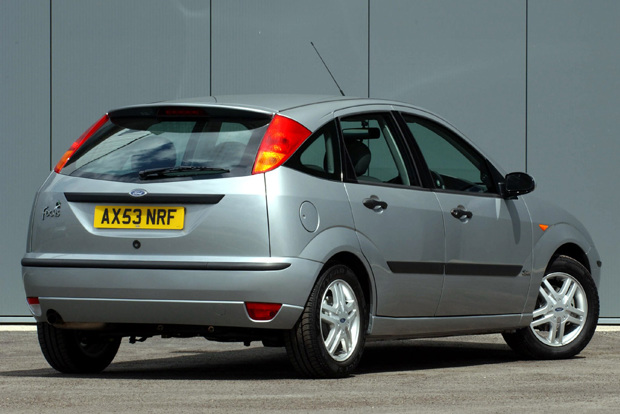
Dubbed ‘Control Blade’ by Ford, it was a simplified multi-link setup based on the system found underneath the first-generation Mondeo Estate, designed to offer the same performance but with less cost and without impinging on boot space. The engineers also worked hard to remove ‘stiction’ from the front suspension to improve its response.
What that meant from behind the wheel was a car that just felt right. It didn’t matter if you had the weediest 75PS 1.4-litre petrol under the bonnet — the way it would flow along the road, communicating through the wheel and the seat of your pants was like no other hatchback you could buy. It changed the game so much that Volkswagen ditched the common torsion beam rear setup and went multi-link for the fifth generation car.
Yes, the Focus carried on in various generations until 2025 — some better than others — but none had the same impact of the original that left its predecessor looking like a glorified horse and cart and the competition running back to the drawing board.
Today, the fact that the Ford Focus sold in huge numbers is good news, but the downside is that many by now are neglected and near the end of their life. However, getting one on your driveway won’t take much — we found a 2001 car with less than 100,000 miles and a complete service history for less than a grand.
They’re tough and reliable too although there are things to look out for. Rust is possibly the biggest issue, so it’s worth getting underneath and having a thorough check.
Petrol engines will go on to big mileages if cared for but electrics need a thorough inspection. The really good news is that parts are dirt cheap and easy to get hold of, so even a rough and ready example can be brought back to life on a modest budget.
If you’re in any doubt about the Focus’s status as a future classic, just take a look at how insane prices are for MkI and MkII Escorts. It’s a humble, everyday car that drove far better than it had any right to, looked like nothing else and arguably marked the high point for Ford products for decades.