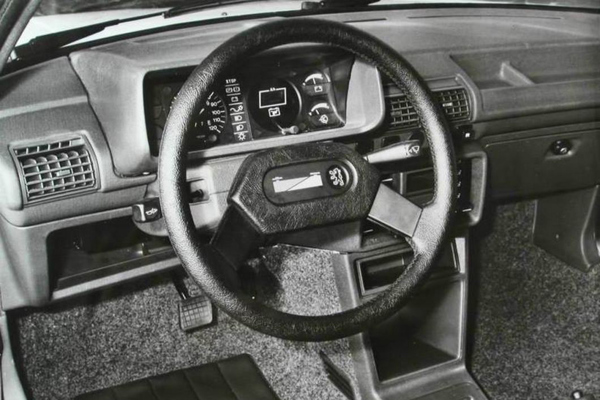
Back to the future: Peugeot 205 Electrique — the 1980s EV pioneer that predicted the future

Wed, 25 Mar 2026
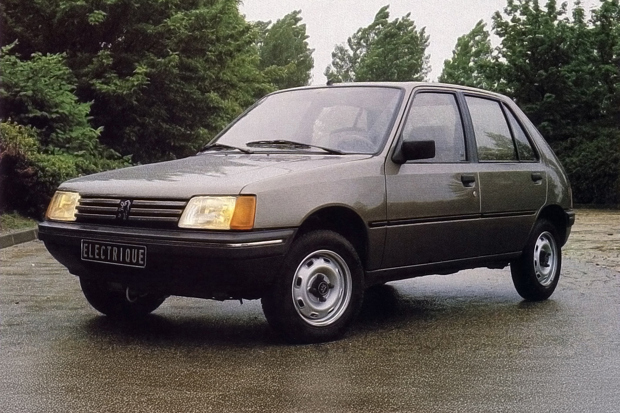
These days, nobody bats an eyelid at an electric hatchback. And given the success of the new Renault 5, perhaps this is one that could be ripe for a comeback now that retro seems to sell?
It wasn’t retro in 1983, though. Indeed, the Peugeot 205 Electrique was a case of cutting-edge technology in a cutting-edge car, as it used a model that had only just gone on sale to demonstrate a vision of the future.
It wasn’t Peugeot’s first foray into electric propulsion, either. The first electric vehicles from the French company date back to 1902, when it made a handful of electric lorries.
In 1941, it tried again with the Voiture Légère de Ville (or VLV), of which 377 were sold as a means of sidestepping wartime fuel restrictions. It was, in concept, not hugely different to the Sinclair C5 of four decades later.
The 205 Electrique, though, was Peugeot getting serious about EVs before they were common. In the 1970s, working in conjunction with France’s national electricity supplier EDF, it produced prototypes of the J5 and J9 electric commercial vehicles.
But the next phase came with additional investment, supported by battery maker Saft and also French aircraft maker Airbus. Less than a year after the 205 had made its public debut, PSA and Saft revealed the prototype 205 Electrique.
It came with a nickel-iron battery, weighing 300 kg, which was installed in the engine compartment in 12 six-volt blocks, with a nominal capacity of 230 amps. The advantage of this chemistry was a doubled lifespan – the car was engineered to last 200,000km, but would take 10 hours to charge.
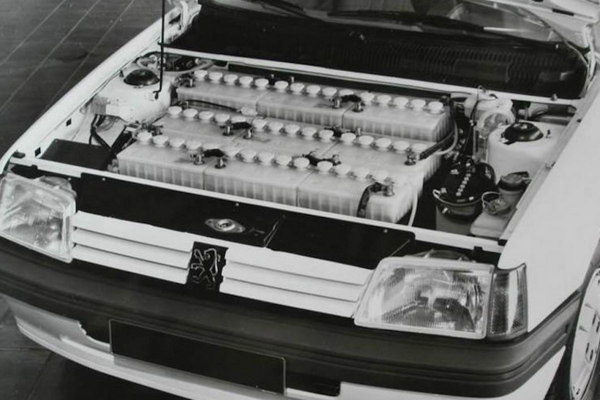
To drive, the Peugeot 205 Electrique was pretty composed, with contemporary road testers complimenting its absence of engine noise and vibration, plus its instant torque. The extra weight over the front end didn’t suit it, though and the few automotive media who drove it were critical of the handling and steering.
The motor was an 8 kW (11bhp) Leroy-Somer engine with a peak output of 17.5 kW (24bhp). It allowed for a top speed of 62mph and 0-30mph acceleration in 11.6 seconds.
By comparison, a modern Peugeot E-208 produces 100 kW (136bhp), with a top speed of 96mph, and acceleration from 0 to 62mph in 8.1 seconds, so it’s fair to say things have progressed somewhat over the past four decades — but for its time, it was a valiant effort.
The range was acceptable, too. In urban use, it would do 140km (around 90 miles), which isn’t that different from the first commercially successful EV, the Nissan Leaf.
The Peugeot 205 Electrique never saw series production, with around 30 prototypes believed to have been made. But it did serve as the basis for the Peugeot 106 Electric, produced by coachbuilder Heuliez and sold from 1993 to 2003 as a production model, largely targeted at French government operators. Over 3500 were made and used similar battery technology.
The 205 Electrique, then, is a car that many looked at cynically when it was first shown, deeming it inferior to the (admittedly brilliant) petrol model — but it was also a brave vision and one whose legacy can be seen very clearly today.