Back to the future: The 1995 Mercedes VRC – a real-life Mojo Swaptops?

Mon, 16 Feb 2026
If you’re a child of the 80s then there’s a good chance you remember a book called Mojo Swaptops—the tale of a car that could change its upper bodywork to suit whatever it needed to do at the time, from being a sports car to a dumper truck.
Someone in Stuttgart must have read it because in 1995 Mercedes gave us the VRC concept, or Vario Research Car to give it its proper title.
The VRC made its debut at the 1995 Geneva Motor show and was billed as a “bold exploration of modular vehicle architecture”, representing a blend of practicality, innovation and forward-thinking design.
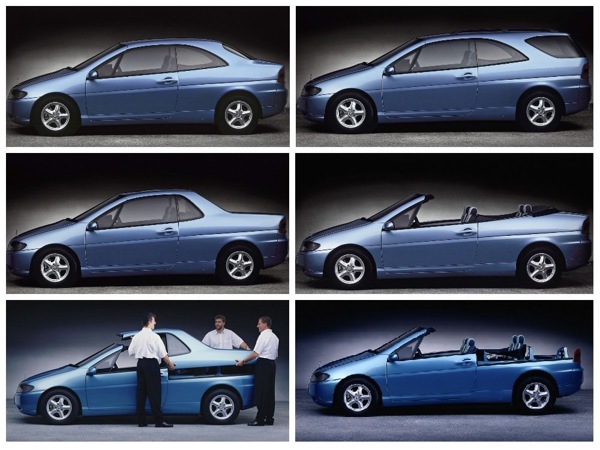
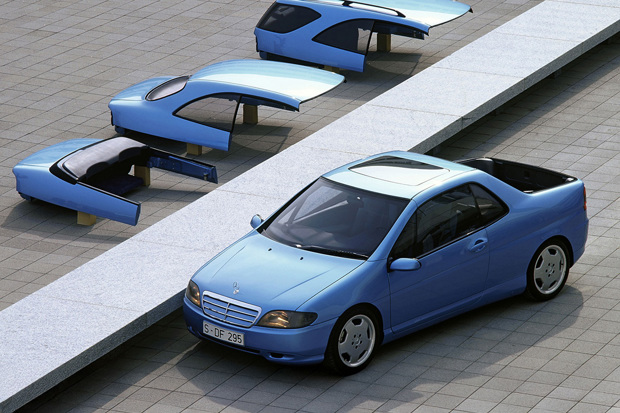
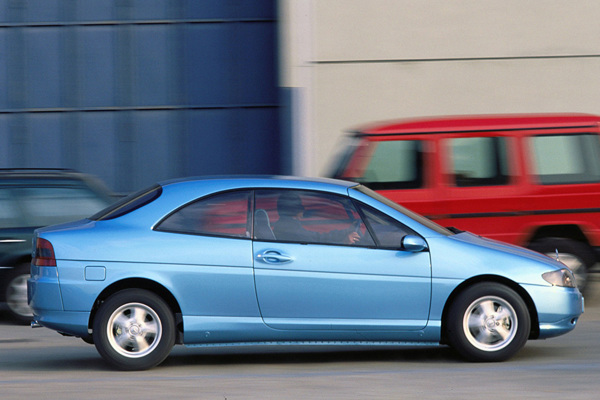
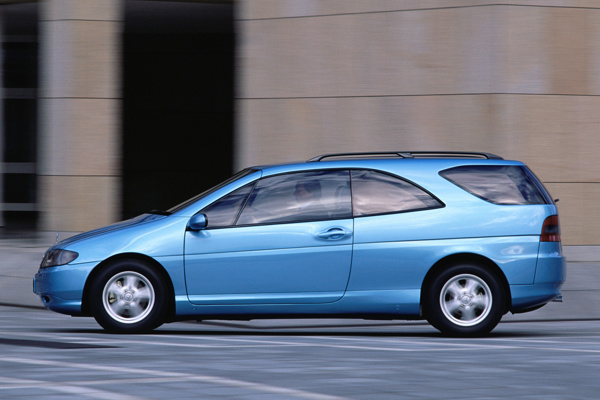
It was designed to be several cars in one. The concept revolved around the idea of interchangeable body modules—in essence, allowing a single chassis to transform between different vehicle types. The VRC could switch from a sleek coupe to a practical estate, a convertible, or even a pickup, all by swapping out its upper body sections. No dumper truck, though, which may have left Mojo fans disappointed.
The upper body of the VRC was designed to make the entire upper structure of the vehicle interchangeable. The process was perceived to be simple and quick, potentially taking less than an hour at a qualified service centre, with the use of specialised tools.
At the heart of the VRC’s innovation was a robust and cleverly engineered floorpan, onto which various upper body shells could be mounted. The lower section of the car, including the engine, gearbox, suspension and basic controls, remained constant.
The upper modules—coupe, convertible, estate, and pickup—were each self-contained and could be securely attached or removed without extensive mechanical intervention.
The electronics and connectors were designed to automatically interface with the car’s systems when each module was installed. For example, swapping in the estate body would automatically enable features like rear wipers and extra lighting, while the convertible module would deactivate them.
Mercedes ensured that safety was not compromised, with each module engineered to meet the firm’s stringent crash standards—crash paths built into the lower body structure, which would remain the same whichever top was fitted.
In addition to its modular body, the VRC featured advanced materials, including lightweight composites, to make the modules easier to lift and handle. This contributed to the car’s efficiency and performance, regardless of which body configuration was chosen.
While the VRC itself never entered production, its spirit lived on in several later Mercedes models and in the broader automotive landscape. The most direct descendant was the Mercedes A-Class, which debuted a few years after the VRC.
The A-Class’s sandwich floor construction echoed the VRC’s emphasis on a flexible, robust platform. Similarly, Mercedes introduced the Smart City Coupe in 1998, which used a similar structure allowing owners to change the upper bodywork and colour of their car in less than half-an-hour.
Indeed, the idea of a flexible platform, capable of underpinning multiple body styles, is now a mainstay in automotive design, especially with the rise of electric vehicles that benefit from ‘skateboard’ architectures.
And in that context, it’s nowhere near as wacky as it might first have appeared. We’ve yet to see a car that can be an estate one day and a convertible the next, but the VRC was actually a long way ahead of its time.