
Back to the future: Nissan MID4 II - the mid-engined, twin-turbo supercar that created the Skyline GT-R

Mon, 23 Feb 2026
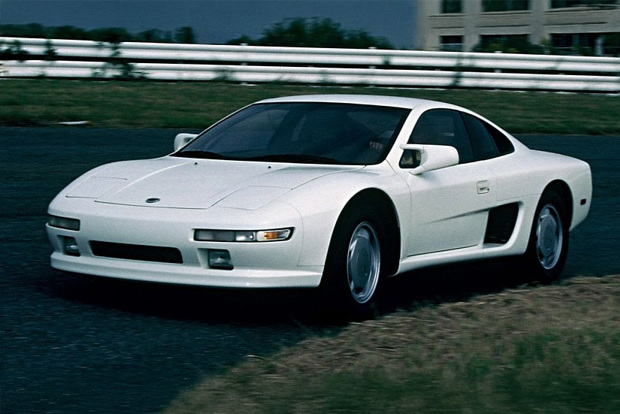
What do you get if you cross a Honda NSX with a Ferrari Testarossa? A Nissan, is the unlikely answer.
Introduced in 1987 as a follow-up to the original — somewhat blander — MID4 concept of 1985, the Nissan MID4 II was pitched as an affordable supercar to rival the likes of the Porsche 911, its name referring to its mid-engined layout and four-wheel-drive powertrain.
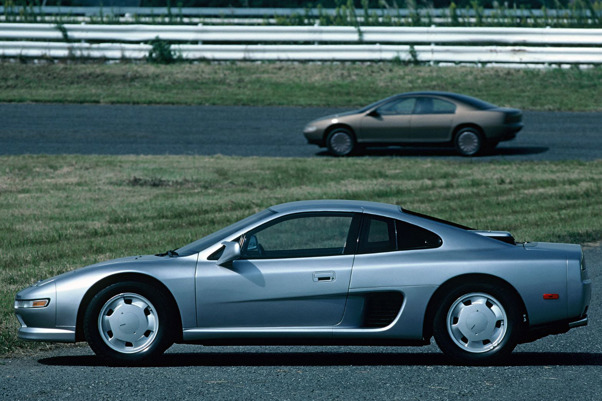
The styling was dramatic, with Testarossa-style side strakes and a front end that predated, yet looked peculiarly similar, to that of the NSX. The rear used a single-piece lightbar that unmistakeably give inspiration to the S14 Silvia, or 200SX as we knew it in the UK.
Amidships, there was a 3.0-litre V6 engine with two turbos and a power output of 330bhp, which eventually went into production in the 300ZX.
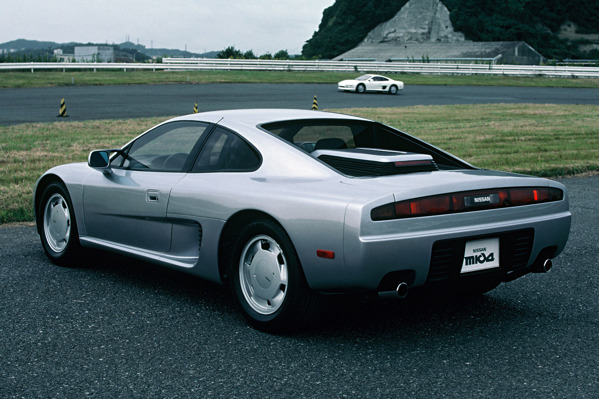
It was sent to all four wheels with 235/55 ZR16 tyres up front and 255/50 ZR16 at the back. Ventilated discs were tasked with arresting the pace and with a kerb weight of just 1400kg it had an impressive a power-to-weight ratio of 230bhp per tonne.
The low weight came from the use of lightweight materials, such as aluminium and fibre-reinforced plastics, while the all-wheel-drive system — known as ATTESA (Advanced Total Traction Engineering System for All-Terrain) — would later be refined and used in the Skyline GT-R.
The combination of a mid-engine layout and four-wheel drive promised exceptional handling, especially at high speeds and through challenging corners. Nissan also fitted the MID4 II with a four-wheel steering system, a pioneering technology that again was used by Honda in the Prelude the following year.
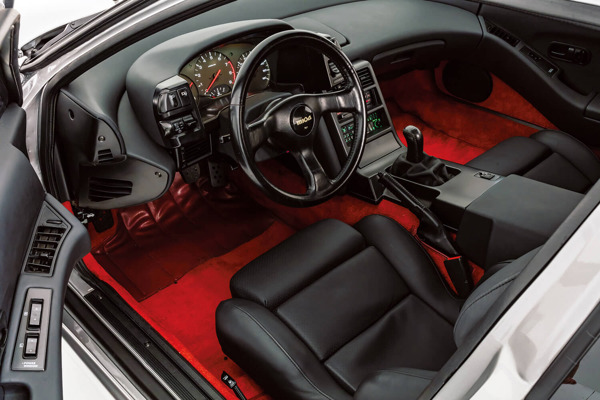
The interior of the MID4 II concept was equally forward-thinking, with lightweight but ergonomic seats and a driver-centric layout. The dashboard featured digital instruments and controls that were intuitive to use, foreshadowing trends in automotive design that would become common in later years.
Despite being a concept, the MID4 II was fully functional and drivable. A few examples were made to study its viability — but budget constraints and a need to focus on core volume models ultimately stood in its way.
Although the Nissan MID4 II never entered mass production, its influence on Nissan’s subsequent models cannot be overstated.
Technologies such as the ATTESA all-wheel drive and HICAS four-wheel steering were later implemented in the Skyline GT-R and other high-performance models. The concept also demonstrated to the world that Japanese manufacturers could compete at the highest levels of automotive innovation.
It remains a testimony to Nissan’s desire to push boundaries and redefine the supercar landscape at a time where European brands dominated it. It might be a concept car consigned to the history books as yet another design study, but this one is important to Nissan and the Japanese car industry at large.
An incredible styling and technological might-have-been, that could have gone on to be so much more, if only Nissan had had the guts and budget to take it to the next stage...
