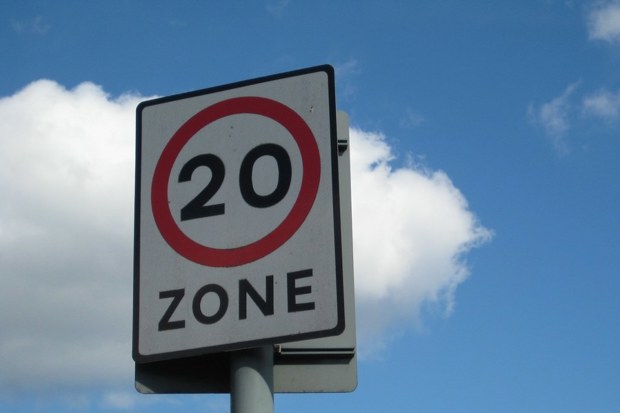
Two-thirds of drivers oppose plans to expand 20mph speed limits
With plans to extend 20mph speed limits to more and more UK roads, new research has found that most drivers aren't on board, despite the safety benefits.
A survey of 1000 motorists carried out by Quotezone.co.uk found that 66% of respondents said they were not in favour of reducing key 30mph roads to 20mph.
Regardless of the road safety implications, the same same study also showed over two-thirds (67%) think that 20mph speed limits are simply too slow.
Road Safety strategy under the microscope
The findings come as road safety was placed front and centre by the government's road safety strategy. Launched in January, the document seeks to find ways to meet its overarching aims:
These are a 65% reduction in the number of people killed or seriously injured on UK roads, and a 70% reduction in the number of under 16s killed or seriously injured. Both targets are set for 2035 in comparison to the years 2022-2024.
As part of the strategy, analysis the proportion of traffic with drivers travelling within the speed limit is to be assessed annually, and new guidance is to be issued on setting speed limits.
Wales leads the way
Wales has made significant progress with the adoption of 20mph limits and now has around 90% of its urban roads set to lower speed limits.
Figures published for the first full year of the slower speed limits showed a 28% fall in road traffic deaths and injuries, equating to 100 fewer people affected.
More than half of all urban roads in London are following suit with 20mph limits while the northwest of England now has over 45% of roads at 20mph.
Road safety charity Brake adds that an average speed reduction of just 1mph reduces crash frequency by 5%. However, despite the positive news from Wales, over half a million people signed a petition to have speed limits increased. A five-year review of the policy will be published in 2029.
Stay alert to changing limits
As more local authorities look to change speed limits, drivers are being encouraged to stay aware of any revisions.
"Evidence from Wales demonstrates that lower limits can have a positive impact on road safety," says Greg Wilson, car insurance expert and CEO at Quotezone.co.uk.
"With lower limits appearing on more roads, it’s important drivers watch for signage and adapt their speed to make sure they stay safe and avoid fines.
"From an insurance perspective, any measure that successfully reduces collisions is positive news for premium prices. Fewer accidents could lead to fewer claims, and over time that has the potential to ease the pressure on car insurance costs."accidents could lead to fewer claims, and over time that has the potential to ease the pressure on car insurance costs.”
Ask HJ
Should the UK introduce 25mph limits?
Regarding the debate about blanket 20mph zones. It's absolutely fair enough near schools but am I the only one who thinks a blanket 20mph seems overly slow on a clear, currently 30mph road? I asked this of my MP a while ago suggesting 25mph is a reasonable balance - slow, with a short stopping distance but still making progress to a destination. This is also close to the 40kph limit on very many roads in Europe and elsewhere and there must be lots of data showing decent gains from 40kph over 50kph.
The reply to my MP from the DoT was: 'In introducing a speed limit of 25mph we would need to consider the disadvantage that too many different limits could confuse drivers, so raising risks for all road users.' Americans on their busy roads can manage lots of 5mph variations, starting at 25mph (and different limits when crossing States) and no doubt other countries can, so it seems a bit of an odd reply and is maybe suggesting that we Brits are a bit thick.
25mph has to be something that people would more readily see as reasonable compared with the very slow feeling 20mph. I sometimes wonder if our 10mph speed steps are overly simplistic compared to metric countries but would you agree it's reasonable to at least consider 25mph where blanket limits are necessary. And surely these would stand out being the only 5mph limit signs - and there are lots of ways to make them more noticeable and avoid any potential confusion?
This is an interesting question. How fast 20mph 'feels' is a subjective opinion and is influenced by a number of factors as well as being individual to the particular driver. Someone driving along a wide, smooth, clear road free of parked vehicles in a brand-new Range Rover will have a very different perception of 20mph to someone in a Caterham driving along a busy and bumpy urban street with cars parked on either side, but the important point is that the physics remain the same regardless of perception.
The US does use increments of 5mph as well as 10mph, but it is important to note the vast difference in scale of the country compared to the UK and that speed limits are generally uniform within a particular state, so drivers are less likely to encounter a wide mix of limits unless they are travelling between states.
Whether a 25mph limit is a reasonable compromise over a 20mph is a matter of opinion. It could be argued that the potential reduction in deaths and injuries achieved by reducing limits from 30mph to 25mph would be marginal compared to reducing them to 20mph, whereas the cost of implementing the change would likely be exactly the same. A 10mph limit could potentially reduce deaths and injuries still further, but would represent a 66% reduction in the maximum speed from 30mph while a 20mph limit is a 33% reduction, and arguably represents a reasonable compromise between safety and journey times.
Answered by David Ross
More Questions