
9 in 10 drivers fail basic hazard perception test

Tue, 23 Jun 2026
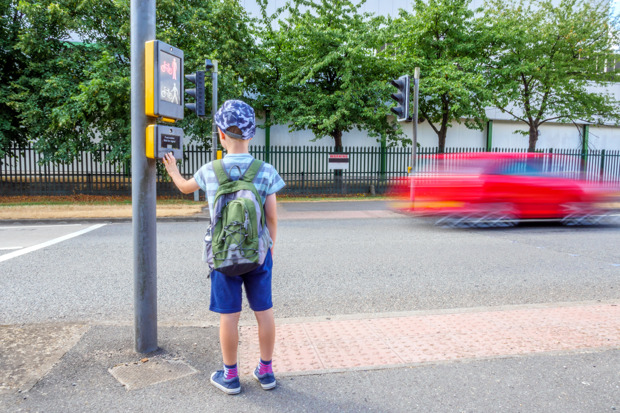
How much attention do you really pay when on a road you know well? Chances are it's not enough, as new research has discovered a vast difference between how observant drivers think they are – and reality.
The survey of 1000 drivers conducted by car insurance price comparison website MoneySuperMarket aimed to discover the difference between how observant drivers think they are and how observant they actually are when out on the road.
To test this, each participant was asked to watch a short video of a car driving in traffic before relaying what they saw. Despite 75% of motorists saying they felt confident that they'd noticed everything important, almost 9 in 10 (86%) completely missed a pedestrian walking at the side of the road.
The test also revealed that older drivers are significantly worse when it comes to being observant. When tested, just 22% of those aged 25 to 34 failed to see the pedestrian and identify it as a hazard, while that figure jumps to the vast majority (91%) of those aged 55+.
Sorry, didn't see you there...
The research also explored "highway hypnosis", or the phenomenon where drivers zone out on familiar routes, such as their commute or when doing the school run.
MoneySuperMarket discovered that 14% of people experience this feeling and are unable to remember parts of their journeys, while just over a tenth (11%) said they regularly miss speed limit changes or their intended turn.
Dangerously, 27% of drivers said pedestrians and cyclists often seem to appear from nowhere, as a result of not being observant enough when behind the wheel.
Just how observant are UK drivers?
MoneySuperMarket’s research has been published in its Invisibility Index, which aims to shine a light on the fact that more than three in five (61%) drivers consider themselves to be more aware of their surroundings than other road users, but the reality is far from that.
"Even for the most experienced drivers, maintaining awareness behind the wheel is crucial when driving a vehicle, and overconfidence can sometimes have very serious consequences," says Alicia Hempsted, Car Insurance Expert at MoneySuperMarket.
"When driving a vehicle, it’s important to maintain your focus, as a hazard can appear at any time. Keep your eyes moving across the road and your mirrors, checking every few seconds for other road users and hazards, as well as before accelerating, braking or performing any manoeuvres."
