
Calls to ditch dangerous 'cheese cutter' cable barriers across the UK

Tue, 19 May 2026
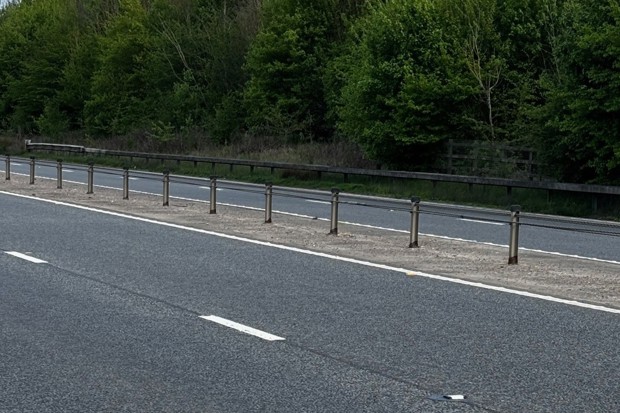
More work needs to be done to consign England's 140+ miles of so-called 'cheese cutter' cable barriers to the history books.
That's the view of road safety charity IAM RoadSmart, which is calling for them to be scrapped and replaced with a safer alternative across the UK's road network by 2030.
The organisation's new petition for Highways Authorities across the UK to commit to their decommissioning by the end of the decade comes after a Parliamentary question dated 26th February revealed that 143 miles of cable barriers remain on England's roads.
National Highways, which manages the road network in England, has begun replacing wired barriers with concrete, but the charity would like to see more being done to help reduce casualties caused by the cables.
Welsh and Scottish roads also feature the barriers, which Northern Ireland is currently in the process of removing and replacing them with safer alternatives.
Motorcyclists at the biggest risk
Cable barriers have a grim reputation for their ‘cheese cutter’ effect, particularly on unfortunate motorbikers unlucky enough to encounter them.
The cables are also supported by unprotected posts that pose a significant danger to bikers in the event of a high-speed accident, something that conventional guardrails avoid.
Transport Research Laboratory figures confirm that between 2014 and 2018, 76% of motorcycle impacts involving cable barriers resulted in riders being killed or seriously injured, compared with 16% for other road users.
Cables cut elsewhere
Further afield, Norway has pledged that no person should be killed or seriously injured in traffic on its roads, and banned the installation of new cable barriers in 2006.
"Motorcyclists have long been calling for dangerous cable barriers to be removed, and yet across England, almost 150 miles of wire rope remain," says IAM RoadSmart Director of Policy and Standards, Nicholas Lyes.
"We are calling on the government to remove and replace them. Motorcyclists are among the most vulnerable road users in Britain, with fatalities rising by eight percent in 2024 despite an overall decline in road deaths, according to Department for Transport data. We need to be doing everything we can to make their journeys safer.”
