
Worn tyres ‘as dangerous as mobile phone use’, study reveals

Thu, 02 Apr 2026
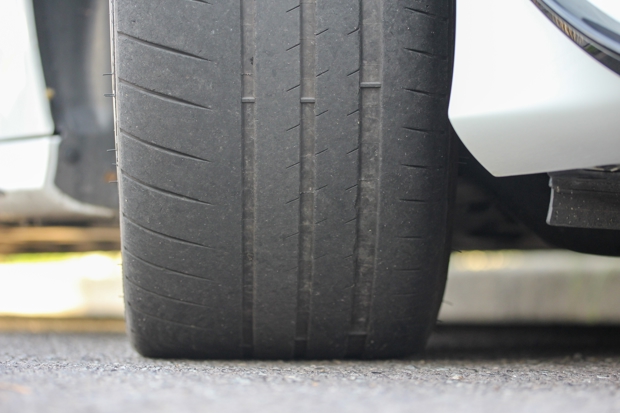
Driving with tyres at the UK legal tread limit of 1.6mm can be more dangerous than using a mobile phone at the wheel.
That's according to a new academic study conducted by Cardiff University and commissioned by Halfords,
The research found that at motorway speeds, a car with worn-but-legal tyres takes significantly longer to stop than a vehicle driven by someone distracted by a phone.
The study compared the reaction times of distracted drivers against the physical performance of tyres with 1.6mm of tread — the minimum depth required to pass an MoT.
At 70mph, using a mobile phone adds an average of 15.55 metres to a car's stopping distance due to slower driver reaction times. However, tyres worn to the legal limit add a staggering 27 metres (approximately six car lengths) compared to a car with tyres in good condition.
While a car with healthy tyres will stop in 96 metres from 70mph, a car with 1.6mm tread depth requires 123 metres to come to a halt.
The findings have sparked a debate over whether the UK’s current 1.6mm limit is safe. Experts from TyreSafe and Halfords suggest that the legal minimum should not be mistaken for a safety benchmark.
"Tyre performance begins to become impaired long before they reach the legal limit. From a stopping distance perspective, the impact of worn tyres is generally worse than phone usage," says Professor Peter Wells, Director of the Centre for Automotive Industry Research at Cardiff University.
Government data supports the concern, showing that deaths or serious injuries resulting from dangerous tyres rose from 147 in 2022 to 172 in 2024.
Drivers unaware of the risks
Despite the physical dangers, public perception remains skewed. The study revealed that only 7% of drivers believe worn tyres are more dangerous than phone use. Furthermore:
- 28% of motorists do not know the legal limit is 1.6mm.
- 28% are not confident they could identify when their tyres need replacing.
- 31% of drivers believe the current legal limit should be raised.
Both Professor Wells and Halfords are now urging motorists to consider replacing their tyres once they reach 3mm of tread, rather than waiting for the legal 1.6mm limit.
"We encourage all motorists to treat tyre maintenance with the same seriousness as they do mobile phone use," says Stuart Lovatt, Chair of TyreSafe.
To help drivers stay safe, Halfords is offering a free ten-point car safety check (worth £15) and free tyre checks at any Halfords or National Tyres garage for those who sign up for their free Motoring Club.
