
Unmarked crossroads top 'most disliked' list, but T-junctions remain deadliest

Thu, 05 Mar 2026
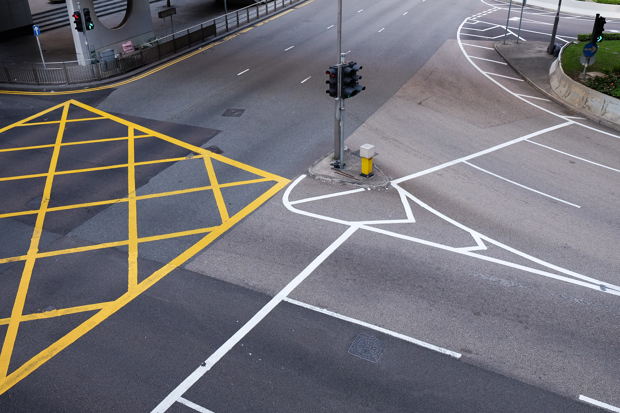
A new study has revealed the junctions most disliked by drivers, along with the ones where they are most likely to crash... and they are not the same junction type.
T-junctions and staggered junctions are the worst for accidents. Shockingly, they were responsible for more than 34,000 casualties in 2024, according to Department for Transport data.
Interestingly though, they’re not the junctions dislike the most — unmarked crossroads top the list there. These are junctions where there are no signs or road markings to help drivers.
Top 5 most disliked junctions (AA poll):
|
And research by AA Accident Assist found that although they are disliked, unmarked junctions could help drivers stay safe in such situation — by forcing them to reduce speed and look around.
“There are too many instances where slowing down and taking more time to look would have avoided a crash,” says AA Accident Assist MD Tim Rankin.
“While unmarked crossroads are the most hated by drivers, it seems the lack of signs and road markings is creating the right behaviours by slowing down traffic and forcing people to look before they drive.
“We now need to replicate this attitude at all junctions.”
The AA poll of more than 13,000 drivers found that yellow box junctions were the second most-disliked junction, hated by almost a fifth of motorists.
Staggered junctions, mini roundabouts and slip roads are also unliked.
In contrast, Give Way and Stop signs, along with controlled crossings such as Pelican crossings, are most favoured by drivers.
The Department for Transport crash data showed that, of the 34,000 people killed or seriously injured at T-junctions or staggered junctions, over 23,500 were travelling straight on.
More than 10,000 were turning right, 3000 were turning right and 2800 were just setting off.
There were a further 12,500 casualties at crossroads and just under 7500 at roundabouts.
“The golden rule remains if you are unsure, wait,” says Rankin. “Drivers must be certain they can safely complete the move before committing.”
🚦 The junction safety guide: How to beat the statistics
The AA study highlights a major gap between what we think is dangerous and what actually causes crashes. Follow these three golden rules to navigate the UK’s trickiest junctions safely.
1. The unmarked junction rule: Priority does not exist
Unmarked crossroads are the UK's most disliked junction type for a reason—there are no signs to tell you what to do.
The reality: According to the Highway Code (Rule 146), no one has priority at an unmarked junction.
Your action: Approach in first gear, slow down to a "crawl," and establish eye contact with other drivers. The very confusion that makes these junctions "hated" is what forces drivers to slow down and stay safe.
2. The T-junction rule: Look beyond the straight
With over 34,000 casualties at T-junctions and staggered junctions in 2024, these are statistically the most dangerous spots on the road.
The danger: Most accidents occur when a driver is travelling straight on and fails to observe a vehicle emerging from the side.
Your action: Use the "tennis match" observation: Look right, left and then right again before committing. If your view is closed (blocked by hedges or buildings), creep forward inch by inch until you have a clear line of sight.
3. The golden rule: If in doubt, wait
AA Accident Assist MD Tim Rankin’s primary advice is simple but life-saving:
The logic: A few seconds of hesitation is always better than a collision. Many crashes are caused by ineffective observation — simply not looking properly before pulling out.
Your action: If you cannot see a clear gap, or if you are unsure of another driver’s intentions at a mini-roundabout or yellow box junction, do not move.
Get the latest car news and expert advice. Sign up for the Honest John newsletter
