
The 2030 petrol and diesel ban: What does it mean for you?
| Written by: Bear Kilpatrick | Last updated: 23rd February 2026 |
Britain’s transition to electric motoring is no longer a distant target — it is a live policy that is already reshaping the new and used car markets. As of 2026, the Zero Emission Vehicle (ZEV) Mandate is in full effect, legally requiring 33% of every manufacturer's new car sales to be electric.
While the headline "2030 ban" suggests a sudden stop, the reality for car buyers is more nuanced. The legislation focuses on the sale of new vehicles, meaning the petrol or diesel car sitting on your driveway today remains perfectly legal to own, drive and sell for decades to come.
In this guide, we break down the latest 2026 rules, the "hybrid loophole" that extends to 2035 and how these targets are artificially tightening the supply of petrol cars right now.
Content guide
- 📅 The 2030 deadline: when does the petrol ban actually start?
- 🔌 The 'hybrid loophole': which cars can you still buy after 2030?
- 📉 Market watch: how the ZEV Mandate is throttling petrol car supply
- 🛣️ Life after 2030: can you still drive a petrol car?
- 🏷️ Resale values: Will your current car be worthless by 2030?
- 🛡️ Enthusiasts & specialists: Is there a future for 'fun' cars?
- ⚖️ 2030 vs 2035: why the UK’s targets differ from the EU
- 🧪 Hydrogen & e-fuels: Are there real alternatives to batteries?
- ❓ FAQs: Your top 2030 ban questions answered
The 2026 Policy Snapshot
- 2030: Ban on the sale of new pure petrol and diesel cars.
- 2030–2035: Hybrid and Plug-in Hybrid (PHEV) sales are permitted if they meet "significant" zero-emission range targets.
- 2035: 100% of new car sales must be zero-emission (EV or Hydrogen).
- Used Market: No ban exists. You can continue to buy, sell, and drive used internal combustion cars indefinitely.
When will the ban on new petrol and diesel cars actually start?
Despite successive governments and announcements, the plan remains much the same as it did in 2020.
- Sales of new petrol- and diesel-only cars to end by 2030.
- A further five-year transition towards zero-emission vehicles.
- Sales of all new vehicles that emit pollution from the tailpipe to end by 2035.
The legislation that effectively bans the sale of new combustion engine-only vehicles by 2030 has been presented differently by successive Prime Ministers. A combination of factors — mostly around EV infrastructure — encouraged the outgoing Conservative government to claim they had pushed that back to 2035 during the General Election campaign, but the legislation for the 2030 deadline was already in force.
The Labour government has since 'restored' the 2030 deadline. It's a way of showing a commitment to either solving the big problem of global warming, or empathising with voters who are rightly worried about their transport choices in the future.
Yet in every public statement since 2020, 2030 has been the cut-off date for sales of purely petrol or diesel powered new cars and vans. Hybrids and plug-in hybrids will still be allowed, with tighter CO2 targets each year. By 2035, all new vehicle sales/registrations need to be zero-emission vehicles. Banning engines isn't the motivation and neither is the type of fuel they use.
The real aim of the legislation is to ensure new vehicles in the UK don't produce pollution when used. If someone makes a petrol-powered car that emits zero CO2 and NOx at the tailpipe, they can sell it. With current technology only viable option is electric vehicles.
Ownership after 2030: Can I still drive my current petrol or diesel car?
The measures in place are focused on new car sales. As it stands, the best advice we can offer if you don't want to buy an electric car — or simply can't due to your location and available charging points — is to plan to buy a new car or van with a long warranty that meets all your needs before 2028.
That's because electric cars will be the focus for all brands after the percentage of petrol and diesel models allowed is smaller than ZEVs, so it's likely some will only produce EVs long before even plug-in hybrids are outlawed.
If you weren't planning on buying a new car, remember that the stock of good used cars — particularly performance or enthusiast models — will become smaller and in greater demand. Scrappage schemes are inevitable, as we have already seen in many clean air zones.
Find a good garage and spend money on proactive maintenance and frequent oil and filter changes. Get rustproofing into sills, inner arches and inner wings. Bear in mind that many manufacturers will stop providing spares ten years after the car is discontinued as well.
It's worth stocking up vulnerable parts when you find cheap ones such as door mirrors, lighting units and ABS sensors. Even if you don't need them before you change the car, the next owner may pay a premium and be grateful to have them.
Or you could just buy a Toyota at the end of 2030, assuming the 10 year warranty remains intact.
Resale values: Will your current car be worthless by 2030?
One of the biggest anxieties for car buyers in 2026 is the "ticking clock" on internal combustion. If you spend £25,000 on a petrol SUV today, will there be anyone left to buy it from you in four years?
The short answer is: probably more people than you think. Despite the looming deadline, our data and current market trends suggest that the death of the petrol car has been greatly exaggerated. In fact, for many owners, the opposite could be true.
The scarcity factor: why petrol values are holding
As we head toward 2030, the ZEV Mandate is forcing manufacturers to sell fewer new petrol cars. This is creating a supply squeeze. If fewer new petrol cars enter the market between now and 2030, the demand for high-quality used ones is likely to skyrocket.
We are already seeing this in 2026. Many buyers still aren't ready for EVs due to charging infrastructure gaps. They are actively hunting for the last generation of reliable petrol and hybrid models, keeping prices stubbornly high.
The lack of cars built between 2020 and 2022 due to Covid means there is a permanent "hole" in the used market, which acts as a floor for prices.
EV v ICE: The depreciation flip
For years, the narrative was that electric cars would hold their value better because they were the future. However, 2024–2026 has seen a massive shift.
Rapid jumps in battery technology and aggressive price-cutting on new EVs have caused used electric values to fluctuate wildly.
By contrast, a well-maintained petrol or self-charging hybrid is currently a safe haven. Buyers know exactly what they are getting and they know there is a massive network of independent garages to fix them.
Where the risks lie
It isn't all good news. Certain types of cars are at risk of significant value drops before 2030:
- Pre-Euro 6 diesels: As more cities implement Clean Air Zones (CAZ) and ULEZ-style restrictions, older diesels are becoming localised assets — valuable in the countryside, but toxic to sell in urban areas.
- High-tax performance cars: With VED (road tax) rates for high-emission cars expected to climb, the running costs of an older V8 or large petrol SUV might put off the average used buyer.
Honest John’s "future-proof" advice
If you want to protect your money between now and 2030, look for the "sweet spot":
- Self-charging hybrids (like the Toyota Corolla or Honda Civic).
- Euro 6 petrol hatchbacks with a full service history.
- Small, efficient SUVs that fall into lower insurance groups.
Your petrol car won't be worthless in 2030. In fact, if it's a desirable, ULEZ-compliant model with low mileage, it might be one of the most sought-after cars on the used market as the "new" alternatives become limited to electric only.
Can I still buy a hybrid or plug-in hybrid (PHEV) after 2030?
Manufacturers and dealers are approaching the targets carefully with detailed adjustments to model ranges and available engines. Expect low stock levels with few discounts and incentives — unless you're buying electric vehicles.
Partnerships and compromises in specification in an attempt to let production reach natural ends in cycle will become frequent, while encouraging greater sales of EVs will be universal.
To meet emissions targets and not force a sudden cut-off car sales in the UK are tracked and balanced under a programme called Vehicle Emissions Trading Schemes, or VETS for short. One aspect is an annual decrease in the percentage of non-zero emissions vehicles allowed to be registered in the year.
The other is the overall fleet average CO2 g/km rating for non-zero emissions vehicles, which also reduces annually but also can be reduced further for a manufacturer if they fail to meet targets.
Selling more zero emissions vehicles can either allow more non-zero emissions vehicles to be registered or the credit can be converted into higher fleet average CO2 allowances.
The more EVs a manufacturer sells, the more petrol and diesel vehicles can be sold without penalty.
The table below shows the registration targets for UK car and van sales before 2031 and the five-year transition to 100% zero-emission vehicle sales. From 2031 only hybrid and plug-in hybrid models are likely to be offered as alternatives to electric vehicles until 2035.
| Year | Electric car sales | ICE car sales | Electric van sales | ICE van sales |
| 2025 | 28% | 72% | 16% | 84% |
| 2026 | 33% | 67% | 24% | 76% |
| 2027 | 38% | 62% | 34% | 66% |
| 2028 | 52% | 48% | 46% | 54% |
| 2029 | 66% | 34% | 58% | 42% |
| 2030 | 80% | 20% | 70% | 30% |
The trading aspect goes beyond single manufacturers. The credits for cars and vans under either registration, or CO2 targets, can be bought and sold between manufacturers, or banked for future use. December 2025's European Commission proposals may reduce pressure on commercial vehicle manufacturers, if approved.
This means electric-only firms such as Tesla get a very valuable asset when they achieve volume sales — one that also means they can influence the number of non-electric cars available by increasing the pool of non-ZEV registrations allowed overall.
Other changes are coming though — and it's highly likely we'll see a big reduction in the availability of powerful, large plug-in hybrid SUVs after 2027. That's because the real-world data used alongside WLTP testing for emissions reveals that people just don't plug them in enough, so the CO2 advantage they have will be taken away. That will negatively impact fleet CO2 levels significantly.
If you want that Mazda CX60 PHEV or Range Rover P550e, get your order in soon.
Will the 2035 electric car ban be relaxed?
The short answer is no. In fact, for most car buyers, the deadline has effectively been brought forward, not relaxed.
Under the current Labour government policy (reconfirmed in early 2026), the UK has returned to a "two-step" phase-out. Here is exactly what is happening:
2030: The pure petrol & diesel ban From 2030, you will no longer be able to buy a brand-new car powered solely by a petrol or diesel engine. This reverses the 2035 extension introduced by the previous administration.
2035: The "total" zero-emission deadline This remains the hard deadline. From 2035, every single new car and van sold in the UK must be 100% zero-emission at the tailpipe (essentially Battery Electric Vehicles or Hydrogen).
The hybrid loophole: Between 2030 and 2035, you can still buy new Plug-in Hybrids (PHEVs) and Full Hybrids (HEVs), provided they meet strict "significant zero-emission range" requirements.
What does this mean for you?
If you aren't ready to go full-electric by 2030, you haven't been "banned" from the showroom. You will simply be funneled toward hybrid technology for those final five years.
Honest John says: Don't let the headlines panic you into a premature purchase. Your current petrol or diesel car remains perfectly legal to drive, sell, and buy second-hand long after 2035. The ban only applies to the registration of brand-new vehicles.
How the 2030 ban is affecting car availability right now
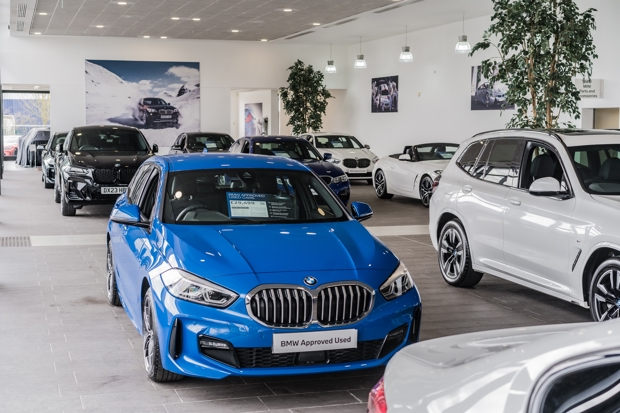
"Why is it so hard to find a new petrol car in 2026?" It’s the question filling our inbox this month. If you’ve visited a dealership lately looking for a traditional petrol or diesel model, you might have been met with surprisingly long lead times — sometimes six to nine months — while electric models (EVs) are available for immediate delivery.
This isn't just a supply chain issue. It is a direct result of the Zero Emission Vehicle (ZEV) Mandate.
The 33% struggle: why petrol supply is throttling
In 2026, the law is simple but brutal for car makers: 33% of every manufacturer’s new car sales must be zero-emission. If they miss this target, they face staggering fines of £15,000 per car over the limit.
To avoid these fines, several major manufacturers are now "throttling" the supply of petrol and diesel cars to the UK. By limiting how many non-electric cars they sell, they can ensure their EV sales hit that 33% ratio.
- The "wait-list" tactic: You might find that your preferred petrol hatchback is "out of stock," but the electric version is sitting on the forecourt with a 0% finance deal.
- The "limited allocation" strategy: Some brands are only allowing dealers a handful of petrol car slots per month. Once they’re gone, they’re gone—even if the factory has the capacity to build more.
Are petrol cars being discontinued in 2026?
Not officially, but the choice is narrowing. In 2026, we are seeing early retirements for popular petrol models. Brands like Ford, Stellantis (Vauxhall/Peugeot) and Volkswagen have already begun trimming their UK model ranges, removing low-margin petrol engines to make room for more ZEV-compliant electric alternatives.
If you are set on a new petrol or hybrid car before the 2030 deadline, our advice is to stop waiting for a price drop. With supply being artificially tightened to meet government targets, petrol cars are becoming a scarcity item—and the prices are reflecting that.
You may also like
- Best electric cars to buy in 2026: Top 10 EVs for every budget
- Car tax rates 2026/27: How the new VED rules affect petrol and electric cars
- Does diesel still make sense? Find out why you should buy a diesel in 2026
Is 2030 a realistic deadline for the UK’s electric transition?
Four prime ministers, two parties, one date. No that isn't referring to Boris Johnson's lockdown activities. His parliament is responsible for the ambitious roadmap to zero emissions though, in part.
For the sake of brevity and clicks, the phrase 'petrol and diesel cars to be banned by 2030' dominated most headlines. That's a little misleading and implies existing vehicles would not be allowed on the roads.
Even if drivers and infrastructure could cope, based on SMMT data and the age of vehicles in use in Britain (a total of 41.5 million in 2023), two-thirds of vehicles sold in 2029 will still be in use by 2042, and a third of those will be in use beyond that.
Is it any wonder Britain's drivers are confused? Yet, based on vehicle lifespan and usage patterns, 2030 is a reasonable deadline if you want to phase out mass consumption of fossil fuels for road transport by 2050.
Exemptions and specialist cars: Is there a future for enthusiasts?
The scheme to phase-out tailpipe emissions between 2030 and 2035 is designed to alleviate pressure on buyers as well as large vehicle manufacturers which need many years to plan their model cycles and recover investment.
Where does that leave smaller, specialist car companies, many of which are based in the UK? Firstly it's important to understand different terminolgy regarding those businesses:
- Micro manufacturers - fewer than 1000 vehicles registered annually.
- Low volume manufacturers - fewer than 2500 vehicles registered annually.
- Component car manufacturers - kits produced for home builders to finish.
Obvious examples of small volume manufacturers would be Caterham, Ariel and Morgan. To put the threat to enthusiast cars in perspective, just 68 new Caterhams were registered in 2024 and since 2001 the highest annual volume has not exceeded 300. Ariel's figures are similar.
Brands which are part of a wider group but operate their own exclusive design and manufacturing facilities may operate under low volume rules. This means DS and Abarth won't be getting away that easily. Alpine however could theoretically move A110 production (and design) to the F1 site in Enstone and continue to sell it under a new brand, distinct from the Alpine A290.

Micro-manufacturing, kit-cars and specialists
You should also be able to register new kit cars with petrol or diesel power up to 2035 and for kits that use the identity of a donor vehicle there appear to be no plans to ban re-registration. There have been cases of restomod EVs being denied their original ID due to simple diversion from the original construction.
As such any modifications have to be very carefully planned with the only clarity being if it's likely to receive a Q-plate, it probably won't be approved after 2035 unless it is zero-emissions.
Any converter or manufacturer which uses individual vehicle approval has an extra five years to adapt to zero-emission powertrains. That may not be enough time for some.
Hydrogen and synthetic fuels: are there real alternatives to electric?
Never mind flying cars, the future we've been repeatedly promised has been hydrogen-fuelled. Abundant, potent and available without intensive mining and logistics, the hydrogen economy has been pitched as the successor to fossil fuels for over a century.
- Advantages - abundant supply, no need for excavation, byproduct is water.
- Disadvantages - extracting hydrogen uses more energy than you get from it, rather flammable.
We can go back to 1807 for a practical demonstration of a hydrogen-powered vehicle. French inventor Isaac de Rivaz used hydrogen for his first spark-ignition engine. More recently BMW 750i V12s, Mazda RX-8s and the Toyota GR Yaris have all been demonstrated and even built in low numbers to test and showcase the ease of adapting existing ICE engines to run on hydrogen.
Overall, though, hydrogen's potential is generally seen as a means of solving infrastructure issues rather than a replacement for petrol. Fuel-cell technology has been demonstrated since 1966's GM Electrovan. You can buy the Toyota Mirai but hydrogen fuel-cell cars are still experimental and not making significant progress towards mass production.
In a fuel-cell vehicle, hydrogen is a substitute for a large battery for energy storage and the main benefit is refilling the tank quickly compared with the time taken to charge a BEV. Battery and charging technology is closing the gap in usability but in the grand scheme of global warming making batteries and charging them introduces more problems for the future.
Hydrogen is wonderful in terms of local emissions when used to generate power. The process of burning it with oxygen, or using it in a fuel cell, creates a lot of energy and the waste product is water. Water is also where most of the world's hydrogen reserves are easiest to access.
The same strength of chemical reaction that generates energy when hydrogen bonds with oxygen takes an immense amount of energy to break — a process known as electrolytic cracking. Hydrogen as fuel is merely moving the emissions and energy demand out of sight, for now. Most of what is generated today is not done in a 'green' way — ironically the majority of it is used to refine fossil fuels.
What other alternatives are there to petrol and diesel
The legislation in place is for zero tailpipe emissions vehicles. It does not specify any given technology to achieve that result, though the assumption with current technology is that this is only achieved by battery electric vehicles — BEVs. Right now it's certainly the least costly way to go zero emissions.
There are alternative fuels for the traditional internal combustion engine. For enthusiasts of cars, motorsport and motorbikes this is an emotional, visceral aspect of the hobby. The noise, the sense of power being generated and the technical accomplishment of getting more power or efficiency from the same basic concept.
But they still produce emissions even if the fuel is carbon-neutral in production and distribution.
An electric motor is a technical achievement and miracle of engineering and science as well, but rather harder to relate to for many beyond smaller, appliance-type devices. There are significant efforts from brands such as Audi and Porsche to find a way of keeping the passion alive without polluting.
There are also several initiatives for creating fuel from methane, ethanols, CO2 and hydrogen combinations such as hydrogen in ammonia. These work well for large companies and motorsport, where you can claim the reduced CO2 in production offsets the tailpipe gases of combustion for net zero.
Synthetic fuels do not result in zero exhaust emissions, so unless the government wants to track carbon-trading data for 41 million vehicles and say it's solved pollution, synthetic fuel will not mean brand new combustion-engined cars cars and vans continue to be sold after 2035.
It may allow a clause for limited high-performance or specialised models to remain on sale but the emissions still remain both behind the scenes and at the exhaust pipe.
.jpg?width=620)
UK vs Norway: Why our charging infrastructure is the biggest hurdle
Taking Norway's 90% zero-emission vehicle sales as a best-case scenario, for years the oil revenues received by that country were saved as a protection against the end of fossil fuel demand. Some of those funds have been invested in sustainable electricity generation and infrastructure.
Norwegians pay a lot of tax personally but they enjoy services and subsidies funded by corporations and a good standard of living. There are lots of Norwegian car enthusiasts and plenty of petrolheads, but new car sales have been biased towards EVs since the first, short-range, urban runabouts whirred onto the streets.
Cars like the G-Wiz and Th!nk were laughed at here — for Norwegians, choosing a light and simple zero-emissions vehicle for short trips is just common sense.
What has worked for Norway that Britain could have done?
In a word, infrastructure.
- Britain is still building houses without off-street parking or sustainable energy.
- Charging networks and public parking have not been given suitable investment.
- Sustainable car use is less of a priority than economic activity.
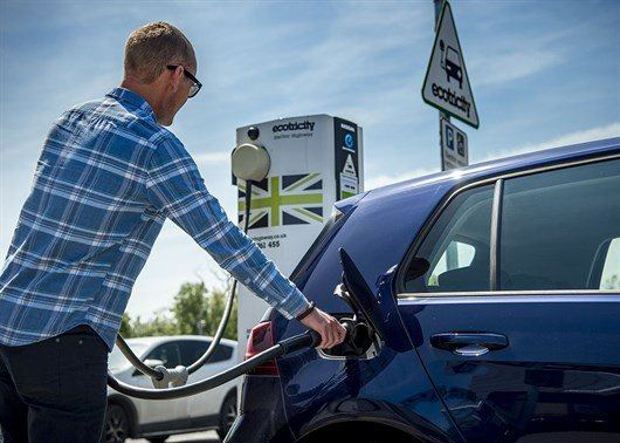
British drivers aren't afraid to drive electric cars — new sales are already at one in five vehicles being EVs, though vans are lagging behind. With so many vehicles on the road, so many users and a high proportion of multi-car households with reliance on street parking, there simply isn't the charging infrastructure to let everyone have an electric car.
It's highly unlikely that such infrastructure will exist by 2030, or even 2050. The demand on the national grid is already a limiting factor for commercial operators, so clever solutions such as off-grid microgenerators, communal parking and charging station hubs are going to be needed.
House builders and town planners are not making this investment to future-proof or plan ahead. Even now, new-build properties targeted at commuters tend to have one parking space, limited on-street parking and reliance on the grid for energy supply.
Private enterprise has a role to play as well as government and local authorities. Artists' impressions of solar-panelled sheltered car parks, accessible park and ride schemes plus charging while you do your weekly shop seem as fantastical as a 1960s sci-fi paperback cover depicting flying cars on Mars.
For many EV owners life outside of large cities looks more like a 700-space supermarket car park with four slow charge points, two of which have old diesel cars in them because they're nearer the shop entrance and 'there's no law against it'. Yet, anyway...
Norway's drivers have chosen to go electric because the government has made it easy and convenient to do so. It seems likely that British drivers would make the same choice given the number taking electric cars on in spite of the occasional challenges — if only previous governments had been brave enough to commit and force some profit out of builder's hands in exchange for a better future.
Frequently Asked Questions: the 2030 petrol & diesel ban
Will my current petrol or diesel car be banned from the road in 2030?
No. The 2030 ban only applies to the sale of new cars and vans. You can continue to drive, buy, and sell used internal combustion engine (ICE) vehicles indefinitely. There are currently no plans to make driving a petrol or diesel car illegal after 2030.
Can I still buy a hybrid car after 2030?
Yes, but only certain types. Between 2030 and 2035, you will still be able to buy new Plug-in Hybrids (PHEVs) and some Full Hybrids (HEVs), provided they can travel a "significant distance" on electric power alone. The government is expected to clarify the exact mileage threshold for these tvehicles by the end of 2026. Mild hybrids (MHEVs) are unlikely to meet this requirement and will likely be banned from new sale in 2030.
What is the "ZEV Mandate" and how does it affect me now?
The Zero Emission Vehicle (ZEV) mandate is a law that requires manufacturers to sell an increasing percentage of electric cars each year (starting at 22% in 2024 and rising to 80% by 2030). In 2026, this means you may see fewer petrol models in showrooms or longer lead times for non-electric cars as manufacturers try to avoid heavy government fines.
Will the value of used petrol cars crash after 2030?
Current market data suggests the opposite may happen. As the supply of new petrol cars dries up, demand for high-quality used petrol and hybrid cars is expected to remain strong, potentially keeping resale values high. However, older diesel cars that are not ULEZ-compliant may continue to see a decline in value.
Is 2035 a "hard" deadline for all engines?
As the legislation stands in February 2026, 2035 is the final cut-off. From this date, 100% of new cars sold in the UK must be zero-emission at the tailpipe (Electric or Hydrogen). This aligns the UK with the European Union’s timeline for a total phase-out of internal combustion engines in new vehicles.
Can I still get my petrol or diesel car repaired after the ban?
Yes. The UK has a vast network of independent garages and parts suppliers. Because there are over 30 million internal combustion cars on the road today, the infrastructure for servicing and repairing these vehicles will remain in place for decades. You won't struggle to find parts or mechanics for the foreseeable future.
