
Toyota Proace Electric long-term test: can an electric van work without home charging?
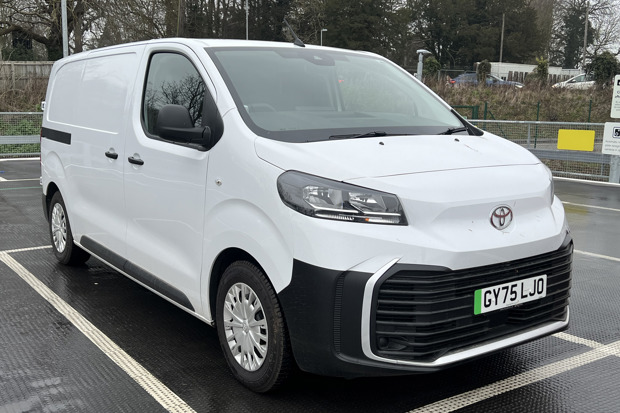
Toyota Proace Electric
- Run by: Craig Cheetham (since December 2025)
- Price when new: £42,772
- Battery capacity: 75kWh
- Power: 136PS
- Torque: 260Nm
- Claimed efficiency: 2.3mi/kWh
- Range: 218 miles (WLTP)
- Insurance group: 35
Report 1: The electric Proace Toyota van joins out fleet
Does an electric van make sense if you don't live in a city? We're living with the Toyota Proace Electric for six months to find out.

Date: 17 December 2025 | Current mileage: 647 | Claimed efficiency: 2.3 miles/kWh | Actual efficiency: 2.4 miles/kWh
There are some huge incentives around electric vans at the moment with the majority of manufacturers chasing their ZEV mandate ratios to avoid penalties – all of which means it may well be worth looking closely at an EV to see if it will suit your purposes and take advantage of some of the discounts on offer.
But while higher-mileage drivers may immediately discount an electric van from their requirements, the landscape has changed sufficiently in recent months to make them much more viable than before.
These days, there are many more public charge-points than there were just a year ago and, importantly, most are DC fast-chargers, which removes a lot of the fear and frustration from owning an electric van, alleviating range-anxiety and minimising recharge times.
This is exactly what we’re looking to delve into with our six-month-long test of Toyota’s Proace Electric – as a rural-dweller who rarely drives in congested urban areas and who doesn’t have access to home charging, does an electric van make sense? Crack this market and the barriers to EV adoption come down further.
We’ve gone for the long-range version of the Proace Electric, fitted with the 75kWh battery pack to give a WLTP range of 205 miles – which is a return of 2.7mi/kWh. Admittedly, it’s the middle of winter, but the best we’ve seen so far is 2.4mi/kWh – not horrendous for such a big vehicle by any stretch, especially as we’re doing a lot of A-road driving
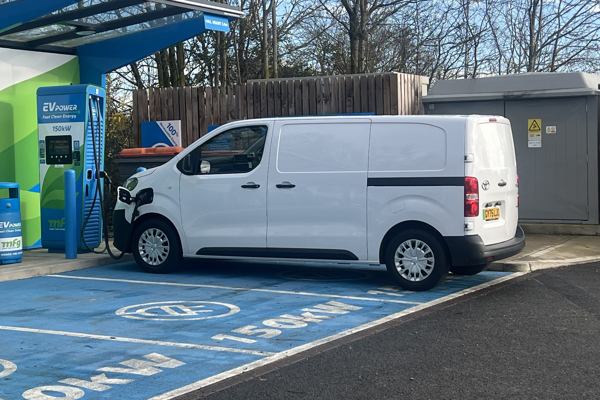
We’re seeing a more realistic range of around 160 miles, with the few 10-80% top-ups we’ve done so far coming in at just over £20 each. Price-wise, that’s not far off parity with a diesel model, but the regularity with which it needs to be charged up could become tiresome over time – we’ll report back.
Otherwise, initial impressions are pretty positive. We’ve gone for the mid-range Icon trim – the one that Toyota says will be the best-seller – and it has all of the things we need but none of the stuff we don’t.
It’s not luxurious, but the infotainment system is great, syncing easily and wirelessly with Apple CarPlay and the driving experience is smooth and responsive. Most passengers who’ve been in the van so far have been impressed by its refinement, while we especially like the fact that most of the driver-assistance systems aren’t particularly intrusive.
We’ve a few tasks lined up for our Toyota between now and its return, including some that feel a little ambitious. We’ll reveal more in due course, but for now, if you’ve got a Proace Electric, or any of its Stellantis sister vans, we’d be intrigued to hear how you’re getting on with it...
Report 2: Does the Proace Electric struggle in the cold?
It’s amazing how popular are when you have a van – and just lately our Toyota Proace Electric has been in high demand.
Date: 13 February 2026 | Current mileage: 1017 | Claimed efficiency: 2.3 miles/kWh | Actual efficiency: 2.1 miles/kWh
Our Proace Electric hasn’t seen a huge amount of action of late, partly as a result of several other test vans all arriving within a few weeks and partly because of the type of journeys I’ve been doing—cold weather, electric vans and multiple 350-mile round trips to visit poorly family members mean that I’ve been relying on my old-but-gold diesel Mercedes E-Class instead. After all, that’s enough stress to consider without having to plot when and where you’re going to charge your van.
Also, the recent cold snap has seen my efficiency drop. When I first got GY75 LJO, it was returning 2.4 miles per kWh – not bad considering it was December and the official quoted figure is 2.3mi/kWh. Lately, that average has dipped down to 2.1mi/kWh, but that’s in no small part down to the demands I have placed on it.
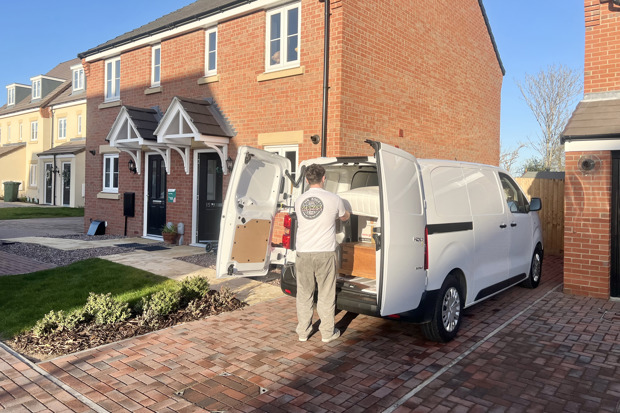
The first of these was when my friend, Mandy, got a completion date for her new house at ridiculously short notice. With just eight days to get moved, there was no chance of getting a removal company to help her in time, so the trusty Proace stepped up to the plate.
It was only a couple of miles from one property to the other, but in total the Toyota did the journey eight times that day, fully laden on each occasion—I worked out it was using around 2kWh on each return trip. Where it came into its own was when loading and unloading—the double side-loading doors and 270-degree back doors meant we could pretty much walk through the load bay when shifting heavy and fragile furniture, while the intelligently placed lashing points made it easy for us to secure more delicate items.

House move completed, the Proace then provided handy commuter transport for a few days while working in London, where I discovered there were some 11kW chargers in the car park at Huntingdon Railway Station—at 34p per kW, a much cheaper option than the fast-charge network I’ve come to rely on of late, but still steeper than charging at home.
But there was still some heavy lifting for it to do. With Mandy now settled in her new home, she’d found a few gaps to fill within her fresh four walls. With my wife never one to turn down a trip to IKEA, we found ourselves three-up in the cab, destination Milton Keynes.
My passengers told me that the front bench seat isn’t all that comfortable on a long run, but from where I was sitting things were peachy and the secret storage compartment for said seat was also very welcome for stashing my camera gear.
Rather than be dragged around a giant blue warehouse, I’d elected instead to do a magazine photoshoot nearby, before chilling out at one of MK’s many EV charging posts with a takeaway coffee. If other UK cities could follow its infrastructure, life with an EV would be so simple.
Returning home, with an entire load of furniture, the temperature dropped to below freezing and we saw the Proace’s worst efficiency figure yet—1.9mi/kWh—but when you consider it was fully laden and that the majority of the 66-mile route was motorway or dual carriageway, it’s also no great surprise. With a number of shorter trips planned and spring soon to be in the air, I’m hoping to see that figure improve considerably.
