
Suzuki e Vitara long-term test: Is this the car that blends EV economics with Suzuki's reputation for dependability?
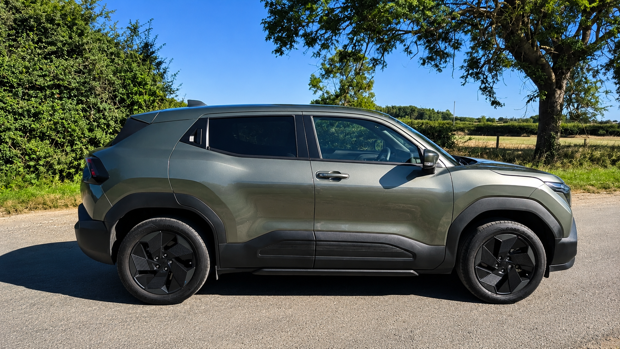
Suzuki e Vitara 61 kWh Motion
- Run by: Dan Harrison since June 2026
- Price when new: £32,999
- Power: 128kW / 174PS
- Torque: 193Nm
- Battery: 61kWh lithium iron-phosphate battery
- Claimed range: 264 miles WLTP combined
Report 1: e Vitara electrifies the Suzuki line-up
Suzuki's first EV looks smart and promises usable real-world range. Is it up to the rigours of family life?
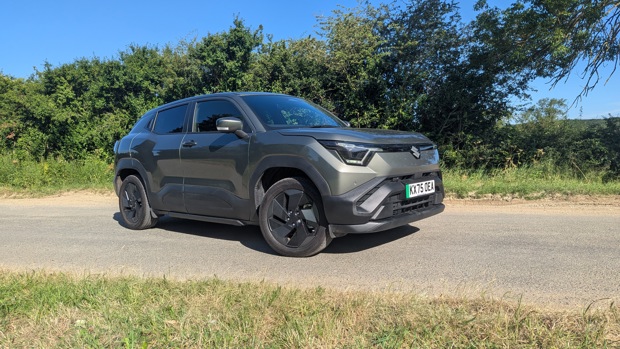
Date: 12 June 2026 | Current mileage: 897 | Claimed range: 264 miles
Another electric SUV turning up on the driveway isn't exactly a novelty these days.
I've lived with enough EVs now to know where the real strengths sit, and more importantly, where the weaknesses tend to show up. Official range figures only tell you so much; how that translates into an actual cold February morning school run is a different matter entirely. Same goes for charging speeds, cabin tech and all the systems meant to make life easier. Some of it works brilliantly, some of it doesn't, and you usually only find out which after a few weeks of normal use.
So the e Vitara's arrival isn't about discovering electric motoring for the first time. It's about seeing how a brand with a very different outlook approaches it.
Suzuki isn't trying to be Tesla. It isn't trying to be Volkswagen either. It's built its reputation over the years on cars that are simple, tough and good value, prioritising ease of ownership over flashy innovation. That's been the appeal of the Vitara and S-Cross for a long time now, and it's clearly the thinking carried into its first fully electric model.
Which makes the e Vitara a genuinely interesting proposition.
On paper, it's not trying to lead the class in any single area. It's going for a balanced package instead. There are two battery options, 49kWh and 61kWh, with the bigger one expected to sell in greater number. So that's the version we've opted for. In 2WD form, the 61kWh version has a WLTP range of up to 264 miles, dropping to around 245 miles if you go for the dual-motor ALLGRIP-e four-wheel drive system.
Those figures sit somewhere in the middle of the current EV SUV market. Nothing headline-grabbing, but nothing unrealistic either, and based on past experience that's arguably the more important quality. A conservative WLTP figure you can actually hit on the road beats an optimistic one that only ever exists on a spec sheet.
Performance is similarly modest. The 61kWh 2WD model puts out 128kW (around 174PS), while the ALLGRIP-e version adds a second motor on the rear axle for a combined 135kW. That's 8.7 seconds 0-62mph for the front-wheel-drive car and 7.4 seconds for the four-wheel-drive one.
Plenty quick enough, in other words. Not fast in the way some EVs now are, but comfortably brisk day to day. And really, that instant low-speed response is what counts most, something EVs tend to deliver regardless of the numbers on the spec sheet.
What's more interesting is how Suzuki has gone about keeping that performance and efficiency consistent over time.
The e Vitara uses a lithium iron phosphate (LFP) battery rather than the nickel manganese cobalt (NMC) chemistry most rivals favour. That choice usually brings better durability and thermal stability, even if it costs a little in energy density. It's another sign Suzuki is favouring long-term usability over chasing the biggest possible range number.
Which feeds directly into one of the car's more significant features: its thermal management system.
Unlike a lot of rivals, the e Vitara gets a heat pump as standard across the whole range. Doesn't sound like much, but it's one of the things that genuinely determines how usable an EV is across a full year.
In simple terms, a heat pump cuts the energy needed to heat the cabin by pulling warmth from the outside air rather than relying purely on the battery. That matters a lot in winter, when a traditional electric heater can eat into your range badly.
In the e Vitara though, it's part of something bigger. The car actively manages battery temperature alongside cabin climate, heating or cooling the battery depending on conditions to keep efficiency and charging performance where they should be. In theory that should help keep range more stable across different temperatures and cut down on the seasonal drop-off so many EV owners complain about. It should also help with charging consistency, particularly on rapid chargers in cold weather.
Whether it actually delivers on that in the real world is something I'll be keeping a close eye on over the coming months.
Charging is fairly standard for the class. Suzuki quotes a 10-80% DC rapid charge time of around 45 minutes for the 61kWh battery, with AC charging taking around 5.5 hours on an 11kW supply or roughly nine hours on a 7kW home wallbox. That puts it broadly in line with rivals rather than ahead of them, which again backs up the idea that this is a car built to slot into people's existing routines rather than reinvent them.
Where Suzuki has been a bit bolder is the ownership proposition. The e Vitara comes with what's effectively a 10-year warranty: a three-year manufacturer warranty topped up with a seven-year service-activated extension, plus separate battery cover. That's a strong statement for a first-generation electric model. It points to real confidence, not just in the hardware, but in the long-term durability of the battery and drivetrain, which is still a worry sitting at the back of a lot of buyers' minds when they're weighing up an EV. It fits with the rest of the car's character too.
Even in entry-level Motion trim, the standard kit list is generous. You get 18-inch alloy wheels, a reversing camera, front and rear parking sensors, keyless entry, navigation and a combined 10.25-inch instrument display with a 10.1-inch central touchscreen. There's a full suite of driver assistance systems too, including lane keeping assistance, adaptive cruise control, blind spot monitoring and rear cross traffic alert.
Step up to Ultra and you get bigger 19-inch wheels, a 360-degree camera, a premium audio system, a glass roof and a powered driver's seat, among other bits. It's all very much in keeping with Suzuki's "everything you need as standard" approach. No endless options list to wade through, and you're not pushed into pricey upgrades just to get the basics.
From a day-to-day perspective, that simplicity could turn out to be one of the car's real strengths.
The interior follows the same logic. There's a dual-screen setup, but it's paired with physical controls for key functions like the climate settings, which is increasingly rare these days but still genuinely useful when you're driving. The cabin feels practical rather than showy, with things like sliding rear seats and a decent amount of storage.
That practicality carries through to how it drives as well. The e Vitara has been specifically built as an electric car, with a relatively long wheelbase and short overhangs to free up interior space. At the same time it keeps a compact footprint and a tight turning circle, so it should be easy to live with around town. For anyone who needs it, there's also the option of ALLGRIP-e four-wheel drive, which is still fairly rare in this segment. It uses separate electric motors on the front and rear axles for extra traction and comes with a dedicated Trail mode for low-grip conditions.
Whether most buyers will ever actually use that is another question, but it does give the e Vitara a slightly different angle compared with the growing crowd of front-wheel-drive electric SUVs.
Over the next six months though, the focus won't be on the spec sheet. It'll be on how all this plays out in daily life.
How close that 264-mile range gets to reality once motorway miles, winter temperatures and regular charging cycles come into the picture. Whether the heat pump and thermal management system really make a difference to efficiency. How easy it is to live with the infotainment, the driving modes and the various assistance features day to day.
And maybe most importantly, whether Suzuki's more straightforward take on EVs actually adds up to a better ownership experience.
Because once the novelty of going electric wears off, that's what actually matters.
Report 2: Heat of the moment: how the Suzuki e Vitara coped with last week's heatwave
the Suzuki e Vitara's range held up impressively through last week's heatwave, but the air conditioning had to work hard to keep pace with high-30s heat.
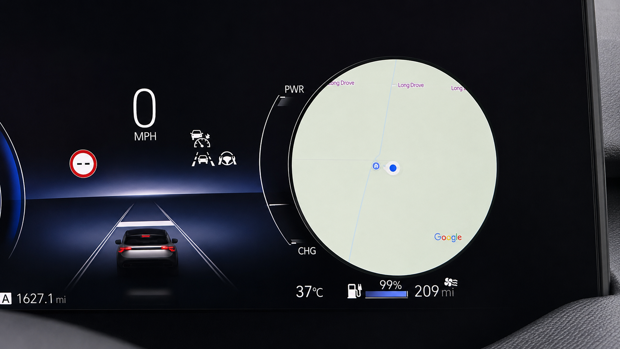
Date: 22 July 2026 | Current mileage: 1367 | Claimed range: 269 miles
As I've previously said, you only really learn about an electric car by living with it. The brochure range figure is useful, charging speed matters, and the spec sheet tells you what you're supposed to be getting. But it's when the weather turns ridiculous, the car's been baking in a car park all afternoon, and you need to get a hot, tired family home that you find out how it actually copes.
Last week's heatwave gave the e Vitara a proper test. This wasn't a pleasant warm spell where you crack the windows for a minute and settle in. This was high-30s heat, the kind where the cabin feels like an oven the second you open the door and the air con becomes the only feature that matters.
The reassuring part was the range. I've been seeing 250 miles-plus, which for a compact family SUV is genuinely usable. That's not some theoretical figure you'd only hit by crawling along at 42mph with the climate control off. It's the range you get from using the car normally: family kit in the boot, air con running, no route planned around a charger.
That matters because this isn't a novelty EV in our house. I've lived with electric cars for years now, so the lack of an engine stopped being the interesting bit a long time ago. What I care about is whether it fits the routine — nursery runs, the shop, longer trips, charging at home, the odd chaotic day where you end up doing far more miles than you planned. On that front, the Suzuki's doing well.
Suzuki quotes up to 264 miles WLTP combined for the 61kWh front-wheel-drive e Vitara, with the four-wheel-drive ALLGRIP-e version officially rated at 245 miles. The smaller 49kWh car is rated at 213 miles. Real-world range always varies, but through the heatwave the bigger-battery car felt close to that headline figure. Seeing 250 miles-plus, and actually believing it, is a good result.
The surprise wasn't the range — it was the air con. In that heat it had to work properly hard. I found myself running the lowest temperature setting and the fastest fan speed for longer than I'd expect. It got there in the end, but there was no instant icy blast like you get in some cars. On the worst days it felt like the system was just about keeping up with the amount of heat pouring in.
That's not unique to the e Vitara. A dark interior, plenty of glass and a car parked in direct sun will test almost any air con system. Even so, it was noticeable. The first few minutes after getting in were the hardest part, especially if the car had been sitting outside for a while. Once you were moving and the worst of the heat had been pulled out, it settled down. But that initial cool-down took some patience.
What mattered more was that it didn't hammer the range the way I'd feared. In older or less efficient EVs, you turn the climate control up and watch the predicted range drop in front of you. Here, the air con was working flat out but the effect on range was fairly modest. That's a real plus — there's no point having a usable EV if comfort and distance are constantly at war with each other.
Some of that comes down to the standard heat pump and thermal management system. Heat pumps usually get talked about as a winter feature, since they cut the energy needed to warm the cabin in the cold, but the same thermal management matters in the heat too. Suzuki says the system balances battery temperature and cabin climate together, managing cooling demand across both when things get warm. In practice, the car is trying to keep the battery and the people in it within sensible limits without burning through extra energy to do it.
There's an Eco mode too, which dials back acceleration and air-con power to preserve range. I'd be wary of relying on that as the default in extreme heat — when the cabin's an oven, comfort comes first — but it's good to know the car can manage those trade-offs when range is tight.
The other useful discovery was that you can turn the air con on remotely. The e Vitara comes with a three-year Suzuki Connect subscription, and the app lets you schedule the climate control before you even reach the car. On the right trim, the same app also controls the heated seats and steering wheel, plus battery status, charging progress and charge scheduling.
That's the feature I'd lean on next time the forecast looks like this. Pre-cooling the cabin before you get in should make a real difference, especially if the car's plugged in or already well charged. It's the kind of small EV convenience that sounds trivial until you're wrestling a hot child seat with everyone waiting to get strapped in.
This is where the e Vitara starts to make more sense to me. It's not the most dramatic EV on sale, and Suzuki hasn't tried to reinvent anything here. It's built around the things that actually matter for family use: sensible range, decent kit, a manageable size and enough practicality to get through the week.
The boot's more compact than some rivals, so if you're running a big pushchair and a lot of luggage, check it carefully before you commit. The sliding, reclining rear seats help, and the 40:20:40 split-fold layout is genuinely useful. There are two ISOFIX points too, which is non-negotiable for how we use the car.
Charging is sensible rather than spectacular. Suzuki quotes around nine hours for a 10-100% charge on a 7kW home wallbox, or five hours 30 minutes on an 11kW three-phase supply. DC rapid charging from 10-80% is quoted at 45 minutes. Nothing to shout about, but workable if most of your charging happens at home overnight.
The heatwave showed both sides of this car. The range held up well and, even with the air con working flat out, it never fell apart. The air con itself could be stronger in extreme heat, and I'll be using remote pre-cooling next time without question. But as a real-world test, it was a positive week. If an EV can get through high-30s heat, family use and heavy climate demand and still show 250 miles-plus, it's doing something right.
