
Renault 4 E-Tech long-term test: Living with Renault's more sensible EV
Renault 4
- Run by: Matt Robinson since April 2025
- Price when new: £26,995
- Battery: 52kWh
- Power: 150PS
- 0-62mph: 8.2 seconds
- Torque: 245Nm
- Claimed range: 247 miles
- Insurance group: 26
Report 1: We welcome the other electric Renault
Our Renault 4 has arrived, and has gotten off to a shaky start...
Date: 22 April 2026 | Current mileage: 311 | Claimed economy: four miles per kWh | Actual economy: 3.7 miles per kWh
Because I have no qualms about being a massive cliché, I took up surfing the moment I moved to the south coast. Actually, it's worse than that – I started lessons before we even completed on our new house. And bought a surfboard.
That surfboard needs to be transported about 30 minutes south to the beach every now and then, which in the BMW 520i Touring I was running up until recently wasn't much of an issue, although it did need to poke into the front bit of the cabin slightly. For the Renault 4 E-Tech replacing the BMW, I was expecting it to be easier, despite the car being considerably shorter.
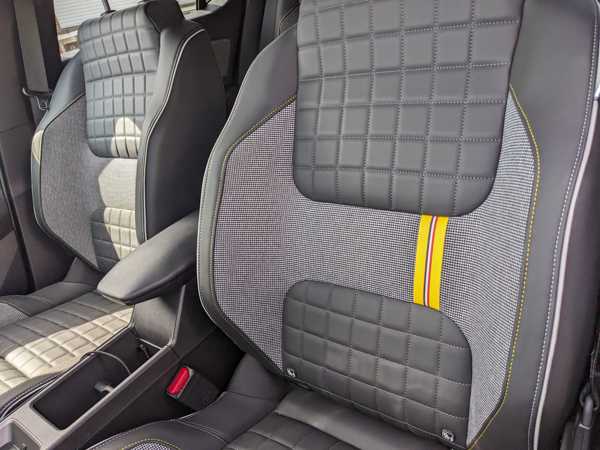
That's because the Renault 4 E-Tech comes with a clever passenger seat which folds fully forward. Renault even made a big deal about this by commissioning a branded surfboard, which was shown in lots of press and marketing material fitting neatly over the folded passenger seat. However, there's a problem – UK-bound cars don't have that feature.
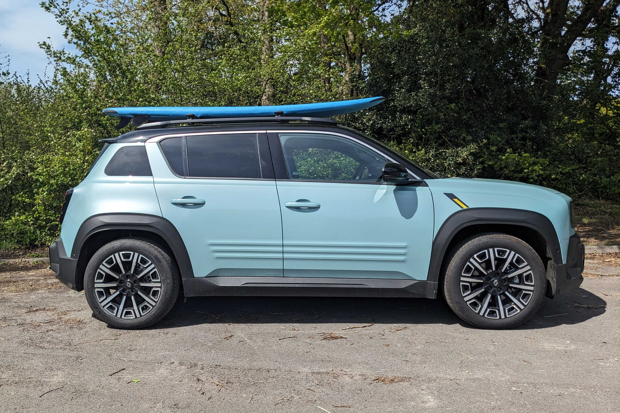
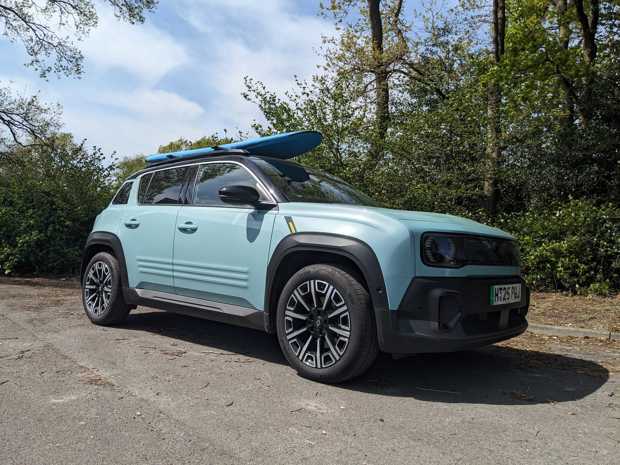
Renault didn't fancy engineering this for right-hand drive cars, so I've had to resort to good old-fashioned roof bars. I still don't have a surfboard carrier yet, but I've had a trial fitting by simply sitting my eight-foot foam surfboard on top, and I have to say, it does look excellent.
The Renault 4 E-Tech doesn't, however, look anywhere near as cool as the Renault 5 E-Tech. In fact, it feels like the model is overshadowed by its smaller sibling. I'm curious as to whether it'll do enough to stand out in the range over the next few months. It's slightly longer and a fair bit taller than the E-Tech, which means more practicality, but it's still a small car. A family holiday in it might be a bit of a squeeze, I'm thinking.
The first thing it had to do, though, was a bit less taxing – take my wife and me to Heathrow Airport and back with minimal luggage. That's a 190-mile round trip, so I thought even after the usual rough deduction you have to make on the official range figure to get something realistic (the Renault 4 E-Tech has a WLTP-rated range figure of 247 miles), I thought we'd be fine. But no.
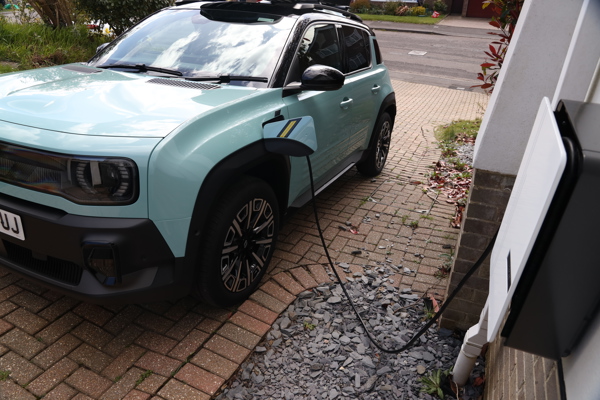
Admittedly, it was a very cold morning when we left, and I hadn't left the car plugged in and set to precondition, which would have been easy enough given that we've had an Andersen charge point fitted ahead of the car's arrival (more on that soon). But even so, I was taken aback by how quickly the range figure dropped. We left with about 220 miles indicated, which after around 95 miles plummeted to 75 remaining.
We'd averaged three miles per kWh, a long way off the promised four miles per kWh. Conditions were much warmer for the return leg, with efficiency hitting four miles per kWh, as it happens, which seems good going considering motorway speeds aren't great for EVs. The efficiency increase meant we probably could have scraped the return journey, but it seemed prudent to stop for a top-up at Fleet Services.
I only left it on long enough for me to go over the footbridge and back to collect a Taco Bell, but even so, at about 85p per kWh, that was enough to cost me a tenner. A tenner I'd have saved by just being a bit more organised and pre-conditioning the car. Lesson learned.
Report 2: Renault 4 vs Nissan Micra – is the extra space worth it?
Some time with a Nissan has allowed us to compare the Renault 4 to its little brother. Confused? Let us explain...
Date: 18 May 2026 | Current mileage: 650 | Claimed economy: 4.1 miles/kWh | Actual economy: 3.8 miles per kWh
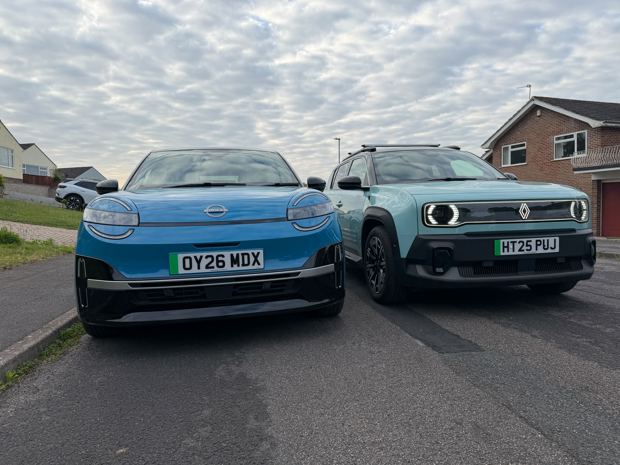
Recently, we had the new Nissan Micra on test. Only, it’s not really a Nissan, despite what its badges claim. You can tell just from the looks of it. Even my other half, who has precisely zero interest in cars, said “It looks like a Renault”. And she’s bang on.
They’ve rebadged it, you fool
The current, 'K15' generation Micra is a rebadged, restyled Renault 5. Granted, in terms of bodywork, only the roof panel and windscreen are carried over, but the proportions are still pure Renault 5. And the cabin is much the same, save for some trim differences.
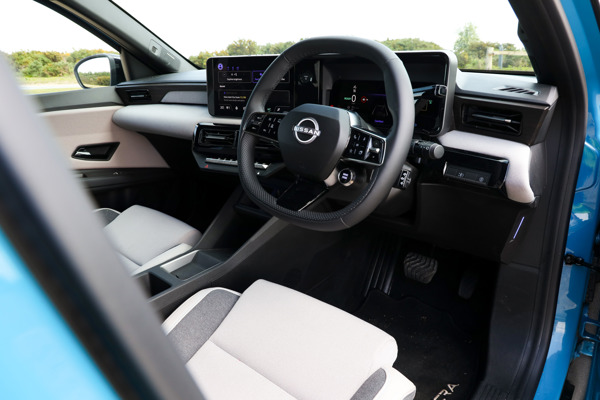
All of this makes for an interesting comparison with the Renault 4 we’re currently running, which is also a close relative of the 5. It made the Micra feel awfully familiar to sit in and drive, given its use of all the same tech and electric drive system. From that perspective, there’s little to separate them.
At the same time, the Micra’s Renault origins have also allowed us to compare the 4 to the 5, without actually bringing the two together. The 4 has slightly taller suspension and is noticeably softer than the Micra/5. It’s not like the Micra/5 is uncomfortable, but it does feel a touch firm at lower speeds when tackling imperfections in the road surface and speed bumps. The 4, in that sense, feels just a little better suited to urban driving, and should you ever be parking up somewhere a little remote, the extra ground clearance will be welcome.
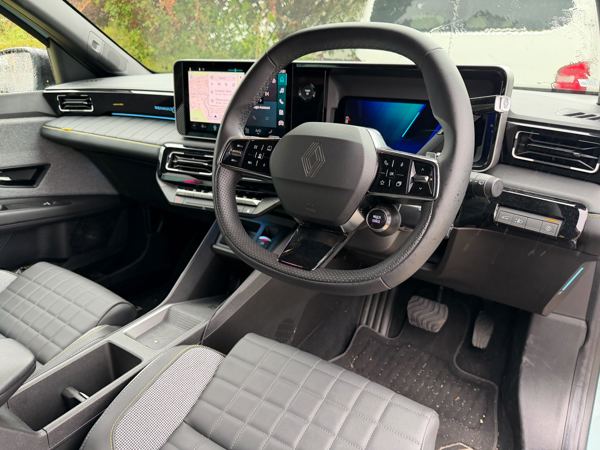
There’s also the extra interior space to consider. It’s not a night-and-day difference, but the extra headroom does make for a more airy-feeling cabin, and you’ll get fewer complaints from taller rear-seat passengers. In terms of boot space, there’s an extra 94 litres, although the load area doesn’t look drastically different - it’s still not that long.
As for which I prefer, that's hard to say. The smaller car is definitely the better-looking one to my eyes, whether it's a 5 or a Micra, and it's more fun to drive corners thanks to its shorter travel suspension. But I also appreciate the additional comfort and practicality of the 4. Really, you can't go too far wrong with either – it'll come down to whether you want/need the extra practicality, and whether you're happy to sacrifice a bit of cool factor for it.
248 miles? I wish
Generally, life with the Renault 4 is going swimmingly, but it's definitely best suited to local use. Even as far as EVs go, the efficiency when driving at a 70mph isn't great, with the range figure quickly plummeting. For example, a recent 60-mile round-trip, mostly made up of dual carriageways and motorways, wiped 100 miles off the range figure I'd started with.
The WLTP economy figure of 248 miles is something you might actually get relatively close to with a mix of driving that leans towards urban usage, but if you've a trip planned that's mostly on the motorway, the efficiency I've managed with the 4 suggests that it'd be more like 180 miles. I'd best get used to plugging into public rapid chargers.
Report 3: First service for the R4 – how much does an EV cost to maintain?
What actually happens when you take an EV in for its first service – and how much does it cost?
Date: 29 May 2026 | Current mileage: 850 | Claimed economy: 4.1 miles/kWh | Actual economy: 3.9 miles/kWh
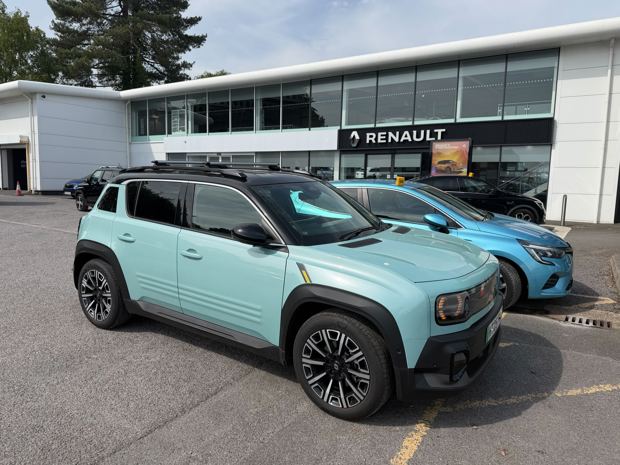
It was recently service time for our Renault 4. That meant heading to my nearest dealer, Hendy Renault Poole. A ‘while you wait’ service could only be booked nearly a month and a half in advance, so I instead went for the option of leaving it with the dealer for the day, with a drop off from 7.30 am. I could have had one of these appointments the next day, should I wanted.
With public transport options being a little faffy and there not being any suitably fancy coffee shops for my fussy tastes nearby (and anyway, I might have been waiting there up to 5.30 pm), I elected to stuff a mountain bike in the back and enjoy a ride through Canford Heath. It’s the first time I’ve tried getting a bike in, and it did just about squeeze in with only the front wheel off, albeit with the front passenger seat tilted slightly forward. It’d be a lot easier if Renault actually bothered engineering the 4’s fully folding front passenger seat for right-hand drive cars…
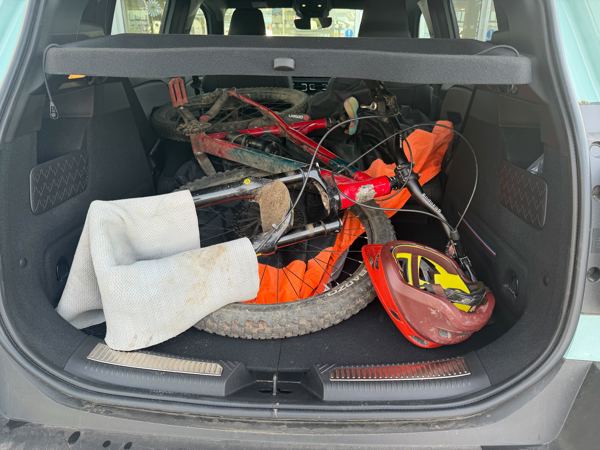
My chosen method of transportation seemed like a good idea until the UK was hit by a heatwave. Unseasonably warm weather for late May made for a sweaty spin for both legs of the journey, so I tried to distract myself from the conditions by contemplating electric car servicing.
What happens in an electric car service?
With no oil to change and no air filter, you might wonder what actually happens during an electric car service. The answer is quite a lot of checking. The car is plugged into a diagnostic check, and on the service sheet, it also mentions inspecting the motor cooling fan.
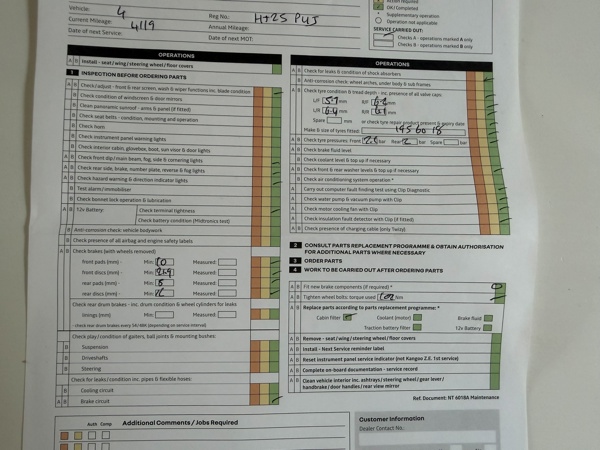
Although there's no engine, gearbox and all the related plumbing, an EV still has plenty of mechanical parts that need checking – things like brake disc and pad wear are checked, tyre pressures and wear are noted, and the dampers are checked for leaks. There’s a cabin air filter change, but that seems to be the only part that’s swapped in the process, unless you're counting a windscreen washer fluid top-up.
Is electric car servicing cheaper?
The less labour and parts/consumables intensive nature of electric car servicing is factored into the costs, which are typically lower than for petrol, diesel and hybrid cars. But still not hugely cheap at main dealers - our bill for the first service came to £230.48.
Report 4: What niggles have we noticed after 1500 miles?
After 1500 miles, it's time to focus on the Renault 4's few frustrating quirks.
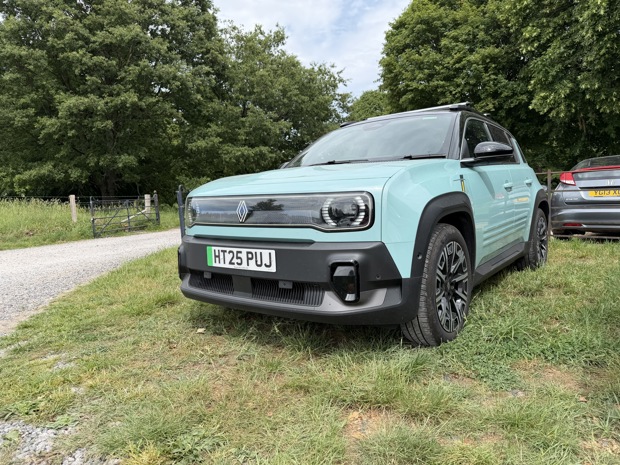
Date: 24 June 2026 | Current mileage: 1515 miles | Claimed economy: 4.1 miles/kWh | Actual economy: 3.8 miles per kWh
I’m now a good chunk into our long-term test of a Renault 4 E-Tech, which has given me time to suss out the car’s less-good elements. None are deal breakers – the foibles are all easy enough to live with, but worth mentioning regardless.
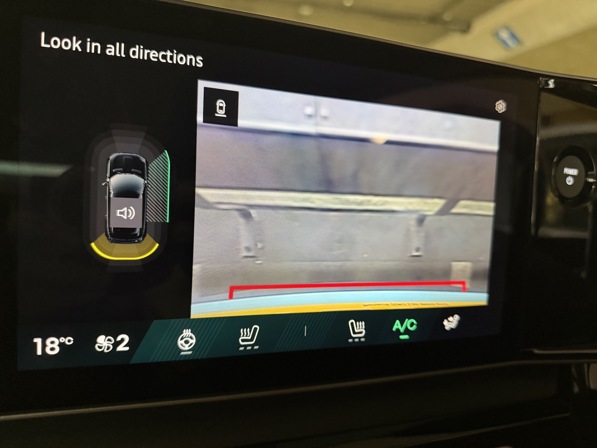
Perhaps the most obvious is the reversing camera. The quality is hilariously bad, and it only gets worse when you get close to an obstacle (when you really want it to actually work), it switches to a weird, squashed top-down view that’s of little practical use. Five years ago, it would have still looked dated. At least the 4 is small and generally quite easy to park. A front camera might make life easier still (even if it was the same terrible picture as the rear), but there isn’t one available as an option.
Problem number two concerns the driver assistance systems. We spend a lot of time these days moaning about the poorly calibrated safety features on Chinese cars. While they do seem to generally be worse, vehicles from elsewhere are definitely not immune from ADAS annoyances.
The speed limit recognition system on the 4, for example, is probably wrong more often than in any other car I’ve tested. It’ll sit on a motorway for mile after mile claiming the limit is 50mph when it most certainly isn’t. The beep isn’t too loud, though, and it’s only a couple of presses on the touchscreen to enable the ‘perso’ mode with all your ADAS preferences (which in my case is no lane assistance and no speed limit warning).
The adaptive cruise control, meanwhile, features a lane assistance feature, but it often seems to keep the car further over to the left than I'd like.
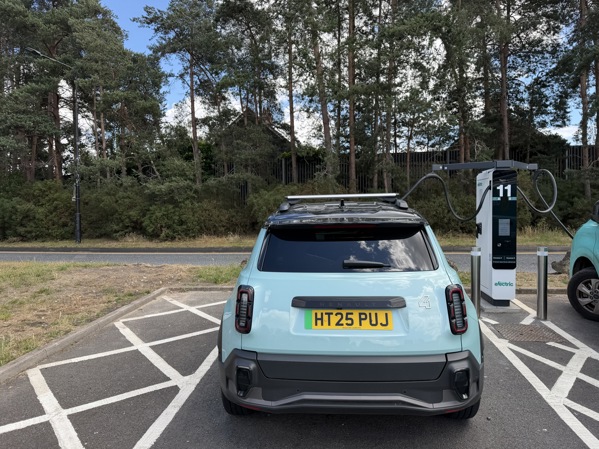
Motorway efficiency continues to be less-than brilliant, even if the car has been preconditioned on the Andersen EV charger I currently use at home. That's a fairly common EV problem, though, and the roof bars fitted to our model will rob a bit of range.
In any case, I've gotten used to simply pre-planning a charge stop on the least painful bit of a journey to do it on. As mentioned previously, that usually involves Fleet Services at lunchtime and a cheeky Taco Bell.
The final one is more personal preference, which is the quality of the sound system. For most, it'll probably be fine, but I find it a little lacking in terms of clarity and low-end punch. Perhaps I can blame my music tech degree, which I never use for anything other than complaining about car audio systems. In any case, this is a problem that's already been fixed – if you order a Techno+ trimmed version like ours, it now comes with a 410W Harman Kardon system.
I've really racked my brain, and I think that's genuinely as far as the foibles go. It really is a very well-rounded car, and a few less-good but easy-to-live-with elements are absolutely fine for a car of this price.
