
DS No4 Review: New name, same problems

DS No4 Verdict

 Comfort-focused drive. Choice of petrol, plug-in hybrid and EV. Leftfield approach to interior and exterior styling.
 Noisy petrol 'hybrid' engine detracts from premium-car aspirations. Infotainment system isn't great. Tight rear headroom.
Find out more about the DS No4
|
 Driven, tested and rated by:
 DS No4 at a glance:
- Body type: Hatchback
- Price range: £32,600 - £44,605
- MPG: 131 - 217mpg
- Number of seats: 5
- Boot capacity: 360 - 430 litres
- Insurance groups: 21 - 34
DS No4: Everything you need to know
In the spheres of luxury fashion, fragrance and cuisine, French brands are synonymous with excellence, yet despite numerous attempts as a nation, it’s almost always fallen short when it comes to upmarket cars. The latest contender to attempt to break the cycle is the DS No4.
Since its divorce from Citroen a decade ago in the pursuit of reinventing itself as a standalone brand, DS has struggled to sell significant numbers of its premium-priced cars since the original DS 3 went off sale. While its new No4 won’t trouble the tops of any sales charts, parent company Stellantis will hope it proves more tempting than the outgoing DS 4.
DS will be keen to swiftly clarify in its impending marketing campaign how to say the facelifted car’s name. Rest assured it isn’t a negative ‘No! 4’, rather an abbreviation of the French numéro in a manner similar to that used by Chanel for its perfumes. And just as its perfectly acceptable in English to say ‘Chanel Number 5’, it will be verbally known here as the ‘DS Number 4.
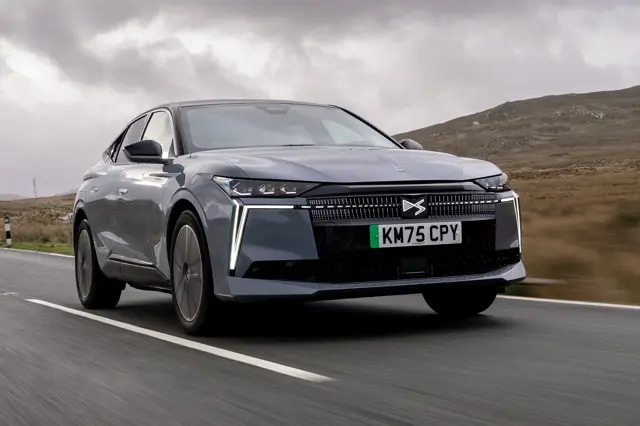
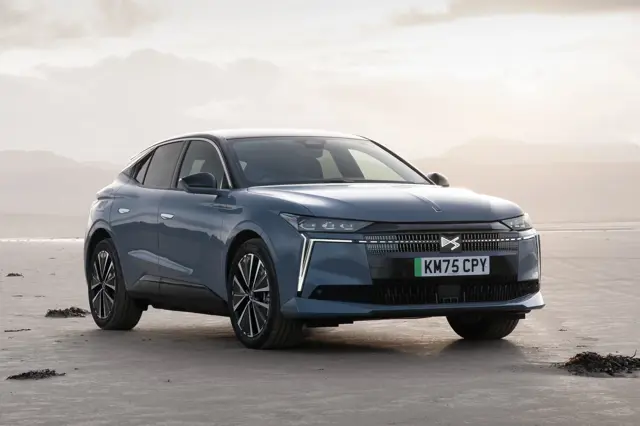
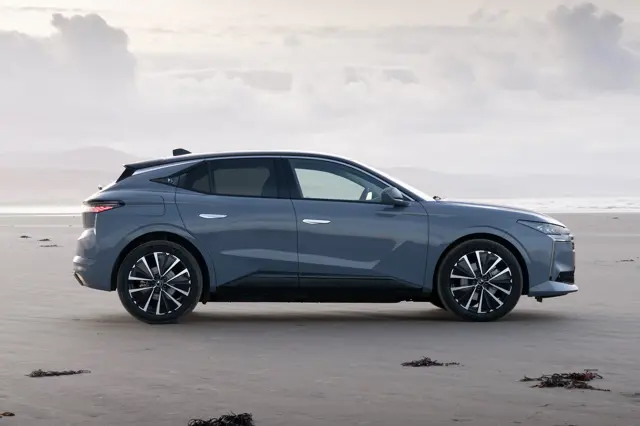
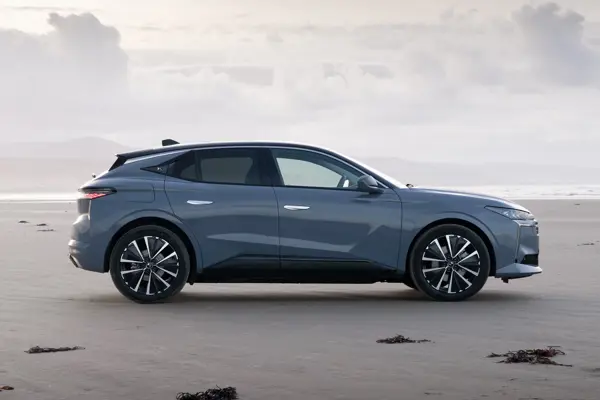
Name and drive system aside, given it’s a refresh, not box-fresh, what’s new about the DS No4 E-Tense? Surprisingly little based upon its exterior, where all of the expensive to produce body pressings are carried over, save for the slightly longer bonnet.
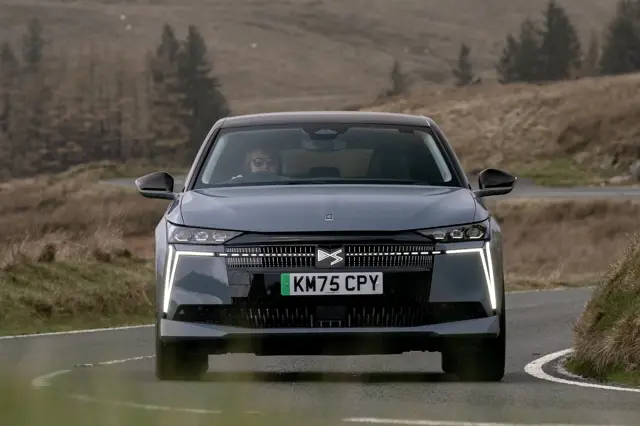
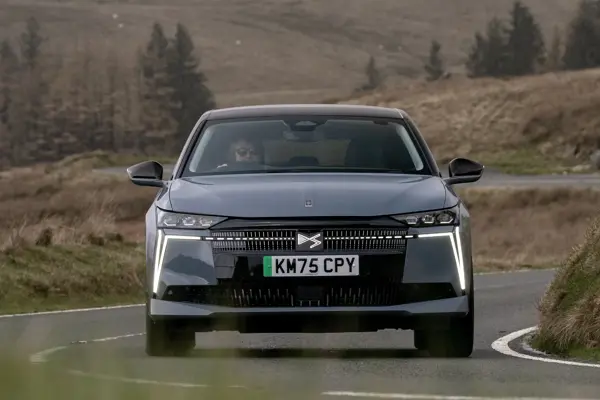
It crowns a redesigned bumper moulding where the incorporated grille has been exchanged for something reminiscent of the No8’s, although the No4 does without its glazed panel aesthetic. Instead, a punctuated lightning flash of LED daytime-running lights are linked in the centre of the nose by an illuminated DS logo.
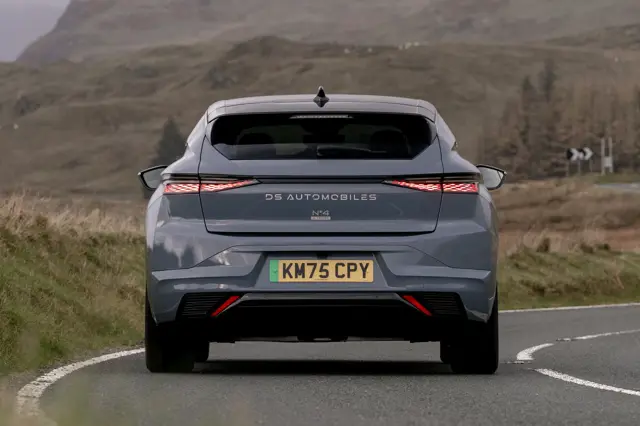
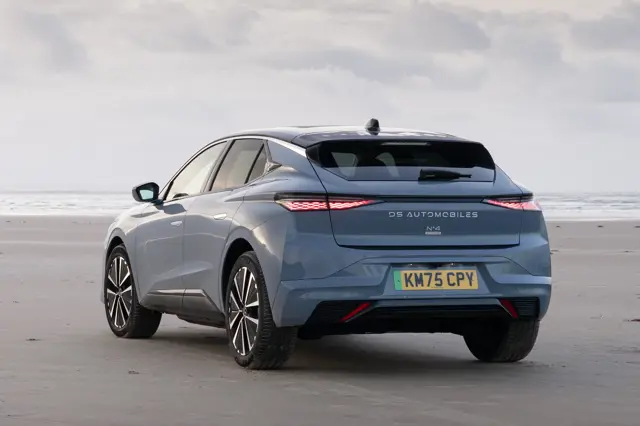
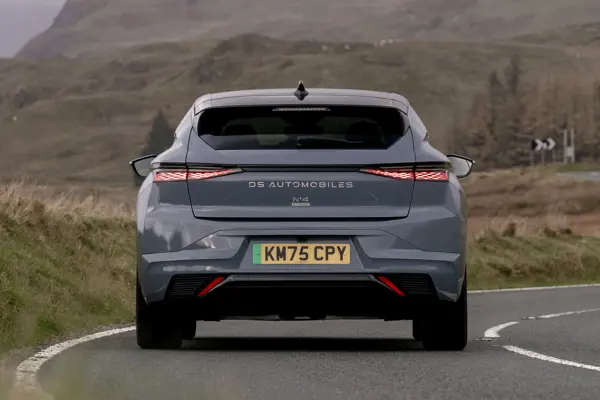
Cleaner, contemporary and less chromed, related touches appear elsewhere around the DS No4, with darker-tinted jewel-like tail lights, greater amounts of gloss black fixtures and fittings and a far bolder DS Automobiles script across the tailgate.
Given that the model it replaces was strikingly styled, the modest scope of the alterations isn’t a negative development. It’s not without irony that, because of its rarity on UK roads, few will notice how subtle the degree of change really is.
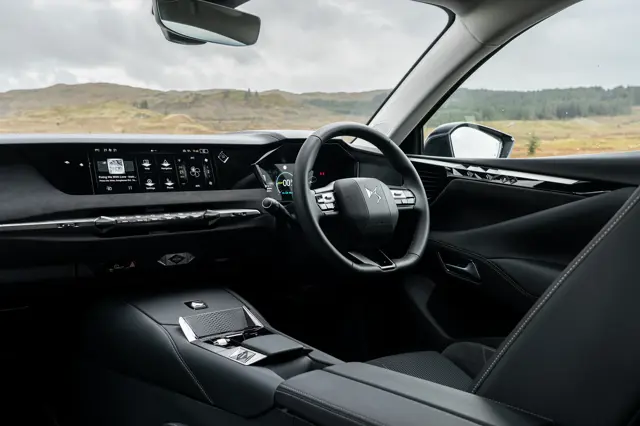
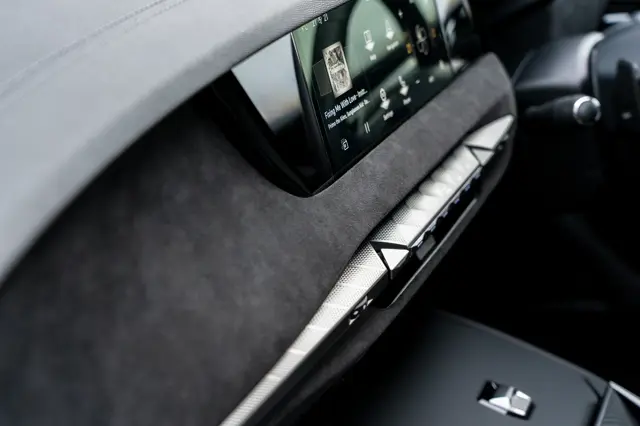
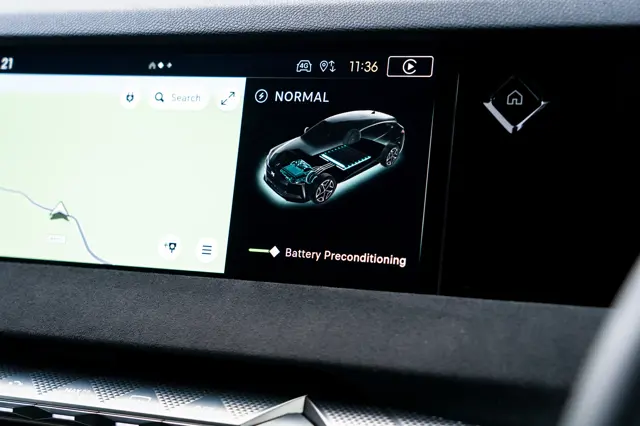
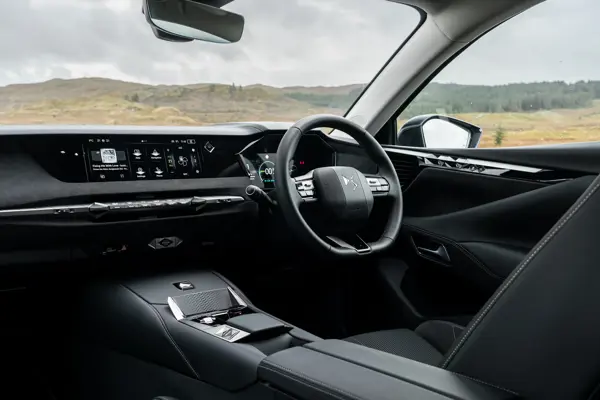
It’s a similar story inside the DS No4 where many of the revised elements relate to upholstery and trim panel textures and colourways. Rather cleverly, DS has inserted a slightly enlarged 10.25-inch driver display screen, complete with new skins for it and the multimedia interface, into the same dashboard moulding as before. No sign of the No8’s X-shaped steering wheel spokes in here, and that's a good thing - we found that downright odd to use when we tested that car.
It's still a tricky car to pigeonhole, which does work well with the whole ethos of the No4 being a bit different. It rivals hatchbacks like the Audi A3 and BMW 1-Series, and it's a similar size, but a slightly raised ride height and side profile gives it a whiff of SUV about it.
Save for the old diesel engine, the engine line-up has been carried over, meaning you get a choice of a mild-hybrid petrol, a plug-in hybrid petrol or the fully-electric E-Tense.
How we tested the DS No4
We've driven the DS No4 in Hybrid and E-Tense forms on a variety of roads in the UK, ranging from twisting rural routes to urban areas and motorways. We've also extensively driven the old DS 4, which, as we've explained, the No4 is best viewed as a facelifted version of, rather than a new car.
Whenever we've driven a No4 or DS 4, we've always been impressed with its focus on comfort. It does a great job of filtering out lumps and bumps in the road surface, helping differentiate itself from the sportier BMW 1 Series it intends to rival.
We also appreciate DS's efforts to make the No4 a little different from the norm on the inside, with intriguing details like the 'Guilloché' patterned details that are inspired by the world of watchmaking.
The Hybrid engine really detracts from the No4's premium aspiration, though, filling the cabin with unpleasant noise and clunkily changing gears via its six-speed dual-clutch transmission. The answer to this could lie in the plug-in hybrid version or the all-electric E-Tense, but there's a dramatic price rise associated with each. They'll make for reasonably affordable company cars, though.
Further souring things is a sub-par infotainment system, and limited rear headroom thanks to the No4's sloping roofline.
"The execution just isn't convincing enough to make the No4 a viable alternative to something like a BMW 1 Series, Audi A3 or Mercedes A-Class" |
Is the DS No4 a good car?
The No4 isn't a bad car, and we do like that it's a bit left of field. Unfortunately, though, the execution just isn't convincing enough to make the No4 a viable alternative to something like a BMW 1 Series, Audi A3 or Mercedes A-Class.
The E-Tense version makes a bit more sense, thanks to its lack of engine noise making for a more relaxing time behind the wheel, but if you're not after an EV, that's not terribly helpful.
DS No4 E-Tense range
Storing the electrical energy is a sub-floor 58.3kWh battery, which allows the most efficient DS No4 E-Tense models to achieve a WLTP Combined cycle range of 279 miles.
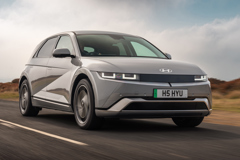
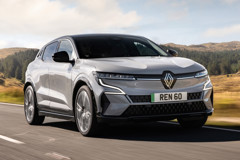
Many rival models of a similar battery size fall slightly short of the No4 E-Tense’s range figure — a best of 264 miles is quoted for the Curpra Born when fitted with the 59kWh battery, the 63kWh Hyundai Ioniq 5 is rated at 273 miles, although up to 280 miles are eked from the Renault Megane E-Tech’s 60kWh pack.
DS No4 E-Tense charging
AC charging can be at flow rates of up to 11kW with DC rapid charging at a high of 120kW, the latter enabling a 20-80% charge replenishment in as little as 30 minutes. Using a typical 7.4kW domestic wallbox the same recharge takes 4 hours 25 minutes.
Reviews for DS No4's top 3 rivals


DS No4 handling and engines
DS No4 2026: Handling and ride quality
The old DS 4 had a clever Active Scan suspension system that surveyed the road ahead and prepared the suspension as necessary, but it's curiously absent in the DS No4, which uses a much more conventional arrangement.
Comfort is still high on the agenda, though. It's a softly set-up car, and while that does mean there is a reasonable degree of body roll if you go around a corner with a bit of enthusiasm, it also results in a car that's better than average at soaking up lumps and bumps in the road surface.
It's not flawless, though, with the larger wheels fitted to the versions we tested having a tendency to thump over bigger potholes and more square-edged speed bumps. Opt for smaller wheels if comfort is a priority, which it might well be if you're considering one of these cars in the first place.
The steering offers little in the way of feedback from the road surface, but that's pretty normal these days, and given that the car isn't remotely sporty in the way it drives (we're not sure the 'Sport' mode is very necessary), it's not much of an issue. We're more bothered about the E-Tense lacking traction when you're accelerating hard, particularly out of side turnings, which results in a significant amount of wheelspin.
DS No4 2026: Engines
There are three distinct flavours of DS No4 available. There's something that DS calls a 'Hybrid', although that a bit disingenuous, as it's more of a 'mild-hybrid' with a small amount of electrical assistance and extremely limited electric-only running. Really, it's more of an extended stop/start system.
The main part of the setup is a 1.2-litre, three-cylinder engine. This configuration doesn't lend itself to refinement (it's inherently unbalanced, causing more vibrations than in a four-cylinder), but there's something particularly thrashy about this one, which is used in most cars across the Stellantis group of brands.
You don't seem any more shielded from its noise in the DS No4, either. It detracts from the car's intended premium positioning, hindering the No4's aspirations further with an often clunky six-speed automatic gearbox. It does, at least, offer up a decent amount of performance. 145PS and 230Nm of torque make for a 0-62mph time of 9.5 seconds and a top speed of 126mph.
We've not yet tried the plug-in hybrid, but again, it's an arrangement used in many other Stellantis cars, so it's another one we're very familiar with. Its 1.6-litre, four-cylinder engine is more refined, although it can still get noisy when revving high. With 225PS and 340Nm of torque, though, there's enough performance in reserve that you don't often need to put your foot down to make decent progress. 0-62mph takes 7.4 seconds, and the top speed is 145mph.
While the old DS 4 could be bought with a diesel engine, there's no such option here.
DS No4 E-Tense batteries and motors
The smooth, quiet DS No4 E Tense fits the best with the car's premium ambitions. It uses a single motor powering the front wheels, fed by a 58kWh battery pack. It offers up a decent amount of performance, with 213PS and 313Nm of torque available. 0-62mph takes 7.1 seconds, and the top speed is 99mph.
Acceleration seems brisk rather than fast, but there's a sense of effortlessness you don't get with the petrol models, which need to make quite a racket to gain speed quickly. We'd rather there was less lag between you pressing the accelerator pedal and something happening, though.
DS No4 2026: Safety
Euro NCAP hasn't specifically tested the No4, but given that the car is little different from the DS 4, we can refer back to the safety body's 2022 test of that car. In fact, there were two – one of the standard car, which yielded a four-star result, and one for a DS 4 with the Safety Pack Plus fitted, which was given the full five stars.
Safety Pack Plus featured a camera and radar-based autonomous emergency braking system, as opposed to one which just relied on a camera. The radar and camera setup is fitted across the DS No 4 range, although some safety tech is still optional even on the top-spec Etoile grade. The 'Absolute Tech Pack' adds a driver attention monitor, a 360-degree parking camera and a more sophisticated cruise control system dubbed' DS Drive Assist 2.0.
These days, it's common to see a driver attention monitor fitted as standard. Also, it's disappointing to see that a blind spot monitor isn't included on the entry-level Pallas-trimmed car, and it doesn't even seem to be available optionally.
DS No4 2026: Towing
The Hybrid has the best braked towing capacity, but only just – it can haul up to 1310kg, while the plug-in hybrid is rated for up to 1300kg. A tow bar is an £800 option. The E-Tense model isn't rated for towing at all.
DS No4 interior
DS No4 2026: Practicality
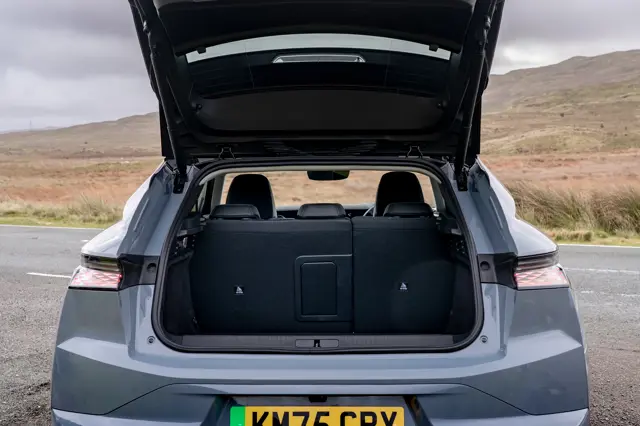
The No4's boot space varies significantly depending on the version you go for. The 430 litres offered by the Hybrid version compares very favourably with the 380-litre boot of the Audi A3, but that figure plummets to 360 litres for the plug-in hybrid. The E-Tense sits in the middle with 390.
The rear seats fold in a 60/40 split. A more versatile 40/20/40 might have been nice, but there is at least a ski hatch that'll be handy for winter getaways. Or more likely, to accommodate a skirting board purchase from B&Q.
With the seats folded, the E-Tense and Hybrid offer the same total boot capacity of 1240 litres, while for the plug-in hybrid, it's 1220kg.
Rear legroom is probably a little better here than in a BMW 1 Series, but then you'd hope it would be, given that the No 4 is a bit longer. Headroom isn't brilliant, though, as a result of the car's sloping roofline.
DS No4 2026: Quality and finish
Given how many components the No4 shares with a Vauxhall Astra, which isn't exactly a car known for its plushness, your expectations of trim quality might not be that high. However, DS has done a good job of making sure all of its unusual trim details, like the watchmaking-inspired 'Guilloché' patterned brightwork, look expensive rather than tacky. There are plenty of soft-touch materials, and any cheaper, harder plastics are kept low and well below your eyeline.
DS No4 2026: Infotainment
The No4's 10-inch touchscreen infotainment is one of the most frustrating aspects of the car. Many functions require it to stop and think for a moment before any action occurs.
We can't single out DS for forcing the No4's occupants to use the screen to change climate control settings – this is, sadly, becoming the norm. But what is usual (although also seen on the related Peugeot 308) is that there isn't a permanently displayed bar along the bottom with key functions like the climate zone temperature buttons. This means bringing up a completely separate screen just to make the cabin a bit warmer or cooler, which isn't ideal if you're relying on the navigation to guide you through a complicated urban route, for example.
On the subject of navigation, the in-built system isn't the best, with the icon representing your current location always lagging slightly behind where you actually are. You're much better off using something like Google Maps or Waze, but that's easy enough thanks to wireless Apple CarPlay and Android Auto being included as standard across the range.
In better news, the 10.25-inch digital instrument cluster is a clear step up from the seven-inch unit it replaces. It presents all the information you might need in a clear, easy-to-read fashion. The traditionalists in us also appreciate it still living inside a traditional 'cowl' rather than being unceremoniously tacked onto the side of the infotainment panel, as is the case in the related Vauxhall Astra.
DS No4 value for money
DS No4 2026: Prices
These are the latest On The Road (OTR) prices for the DS No4 as of April 2026 – prices can change, so please use these as a guide before checking DS's latest price lists.
| DS No4 Pallas | From £32,600 |
| DS No4 E-Tense | From £33,800 |
| DS No4 Etoile | From £35,400 |
Is the DS No4 good value compared to rivals?
On the face of it, it doesn't really look that way. The Audi A3 range starts from £30,000, and that's a far better car than the No4. A BMW 1 Series can be bought for near enough the same price as an entry-level No4, and again, it's a car we rate far higher.
Residual values will be better for both, too, although DS doesn't give you as many opportunities to inflate the price as the likes of Audi and BMW, instead offering a decent standard spec on each of the three trim levels.
If you want either a plug-in hybrid or the E-Tense full EV, it's a big jump in price, with premiums ranging from just over £6000 to £7000 depending on the trim level. That won't be so relevant for company car users, though – a Benefit in Kind (BiK) tax rate of 9% for the PHEV and 3% for the full EV will mean low monthly salary sacrifice.
DS No4 2026: Reliability and running costs
The Hybrid manages up to 54.3mpg according to the WLTP Combined figure, and that's actually not too far from the truth - it doesn't take much effort to get over 50mpg. Somewhat less realistic is the figure for the plug-in hybrid, which is up to 387mpg. The current test regime is very flattering for PHEVs, meaning you're best off ignoring that number.
With up to 50 miles of electric-only running, though (bank on more like 40 miles in real-world driving conditions), those with shorter commutes might rarely use petrol at all. On a typical electricity tariff, it'll cost less than £4 to fully charge the battery.
Charging the E-Tense's battery from empty to full will be more like £15. With either the PHEV or the EV, though, you can charge for a fraction of those prices by getting on a variable EV tariff and timing your charging sessions to coincide with cheaper off-peak periods.
Recent tax changes mean it'll be the same £200 to tax any variant of the DS No4. If you opt for a plug-in hybrid, though, you'll end up paying the government's £425 expensive car tax supplement unless you stick to the entry-level Pallas and go easy on the options. Otherwise, it'll be over the £40,000 threshold. The E-Tense escapes this because the threshold for EVs is now £50,000.
Satisfaction Index
 What is your car like to live with?
We need your help with our latest Satisfaction Index, so that we can help others make a smarter car buying decision. What's it like to live with your car? Love it? Loath it? We want to know. Let us know about your car - it will only take a few minutes and you could be helping thousands of others.
Help us with the Honest John Satisfaction Index nowDS No4 models and specs
The DS No4 is available in three trim levels called Pallas, Performance Line and Etoile.
The entry-level DS No4 Pallas comes with the following equipment fitted as standard:
- Front/rear parking sensors
- Reversing camera
- Electrically adjustable and folding heated mirrors
- Dual-zone climate control
- Interior ambient lighting
- LED headlights
- Wireless Android Auto/Apple CarPlay
- 10-inch digital instrument cluster
- 10-inch touchscreen infotainment system
Upgrading to the DS No4 Performance Line introduces:
- Acoustic laminated windows
- Electrically adjustable front seats
- Golden exterior trim
- Backlit front grille
- Tinted rear side windows
- Wireless smartphone charger
The top-spec DS No4 Etoile drops the Performance Line's bronze detailing while adding:
- Keyless entry/start
- Matrix LED headlights
- Flocked glovebox
Model History
- May 2025: DS4 becomes DS No4 as part of major update
- December 2025: DS No4 E-TENSE Performance Line model priced from £40,360
May 2025
DS4 becomes DS No4 as part of major update
The DS4 has become the DS No4, following the brand's new naming convention brought in with the larger DS No8 EV. Unlike the No8, the No4 isn't an all-new car, but a major update of the outgoing DS4.
Aside from the new name, the major change is the addition of an electric version of the No4 for the first time. The EV has a 213PS motor and 58.3kWh (net) battery, giving a range of up to 280 miles.
As before, there's the option of a 225PS No4 plug-in hybrid, now with a 14.6kWh battery, giving up to 50 miles of range, or 30% more than the DS4. A 145PS hybrid is also offered.
The design has been overhauled inside and out to bring it in line with the look of the No8. New light designs feature, as does a 12mm longer bonnet. 19-inch alloys are standard, with 20-inch rims an option. On the inside, there's now a 10.25-inch digital instrument cluster, plus uprated infotainment.
The No4 will be available in Pallas and Etoile trims and goes on sale later this year, with first deliveries in early 2026.
December 2025
DS No4 E-TENSE Performance Line model priced from £40,360
DS has added a new Performance Line model to the electric No4 range. Built to pay tribute to the firm's DS E-TENSE FE25 Formula E racer, the No4 E-TENSE Performance Line is priced from £40,360.
Based on the Pallas trim, the Performance Line models include the DS IRIS System, which incorporates connected navigation with in-car EV Routing and the e-Routes app, ChatGPT and three years of connected services.
Also included are 19-inch alloys, black Alcantara seats, dashboard and door panels, the Electric Seats Pack, acoustic rear privacy glass, Blind Spot Detection and DS Drive Assist with Rear Cross Traffic Alert.
