
How to sell your car 2026: Get the best price & avoid scams
| Written by: David Ross | Last updated: 9th February 2026 |
Selling your car seems straightforward, but it can be a time consuming process. Firstly there are various ways to sell your car, from the traditional sign in the windscreen to selling to an online buying company like WeBuyAnyCar. All have their pros and cons.
To help we've created this guide to selling your car. We'll explain the different ways of selling your car so you can decide which is the best for you whether you're looking for a quick and easy sale or want tips on how to sell privately. Hopefully, we can help you get the best price for your car.
Guide to selling your car: quick navigation
- ✅ Car selling checklist: Need-to-knows
- 💰 Know your value: get an accurate valuation
- ⚡ Online buying services: instant offers compared
- 🏢 Selling to a dealer: trade-ins and cash sales
- 🔨 Car auctions: pros and cons
- 🤝 Selling privately: get the highest price
- 📱 Where to advertise: best platforms
- 🛡️ Safe viewings: handling test drives and buyers
- 🏦 Getting paid: secure bank transfers
- ⚖️ Legal rights: seller responsibilities
- 📩 Tax & insurance: how to claim your refunds
- ❓ Frequently asked questions
Essential car selling checklist: What you need to know in 2026
How to get the highest price for your car
As a rule, if you’re prepared to roll up your sleeves and sell your car yourself you’re almost guaranteed to get more money than selling it any other way.
It’s a more laborious and time consuming process than, for example, selling it to an online buying service. Plus you will need to work out how much the car is worth, prepare it for the sale and advertise it – but if you want the most amount of money possible then selling privately is the best way to go about it.
How to get an accurate car valuation before you sell
Age, mileage, condition, specification and even colour are just a few of the seemingly endless factors that can influence your car’s value. One of the best ways to work out what it’s worth is to have a look at classified adverts for similar cars. This is how the Honest Used Car Prices work - it scours online to find actual cars for sale. You can search for a price below or use the link above.
Search for models that are as close to yours as possible in terms of year, mileage, specification and condition, as this will give you a good idea of what your car is really worth.
Should you sell your car online?
There are ways of shifting your car quickly if you don’t have time to sell it yourself – but you’re unlikely to get the best price for it. The most common option is to trade it in at a dealer but you could also sell it through an auction centre.
There are a number of online car buying sites that promise to buy your car whatever its condition, the most well known being We Buy Any Car. However, they will often try to reduce the online quoted value once you take your car to one of their sites and are generally the least cost-effective way of selling your car.
Preparing the car is key
Even very cheap cars should be given a good clean before they’re sold. A full professional valet will sharpen it right up and it’s worth considering smart repairs to remove small dents, scratches and similar blemishes depending on the value of the car.
Buyers don’t like the thought of having to pay for things shortly after the sale so it may be worth shelling out for an MoT if the car needs one imminently as well as sorting any minor faults.
Stick to the facts when you write the advert. Give as accurate and as detailed a description of the car’s condition as you can, even if it’s poor. You’re wasting your time if you mislead buyers or worse, breaking the law if you sell a car without disclosing a serious fault or that it has outstanding finance.
Photographs should illustrate the car as clearly and cleanly as possible. You want to make it look good so make sure you’ve done any cleaning and preparation before taking the pictures.
How to avoid car selling scams and fraudsters
Beware fraudsters targeting cars for sale. Odd emails with curious back-stories are often just fishing scams looking for bank details, as are offers that sound too good to be true or messages from people offering to buy the car without seeing it.
Buyers should be encouraged to take test drives but make sure you’re sitting in the car before you give them the keys. And check they are insured to drive it - don't be afraid to ask for proof. At the end of the sale, never allow the buyer to leave with the car until they’ve paid. That could mean anxiously waiting in front of your computer for a cheque or a bank transfer to clear.
Be prepared to negotiate
Set a limit for the lowest price you’re willing to accept for the car. It’s common practice to negotiate so having a firm idea of what you will and won’t accept makes the process easier. Don’t be afraid to turn down offers you consider too low unless you’re in a real hurry to sell.
There are plenty of ways to accept payment and a faster payment bank transfer (done online or over the phone) is among the best, as the money can be in your account in less than two hours. Cash is also instant but it’s safest to do the handover in a bank. However you sell, don't hand over the keys until you've safely got the money in your bank or in your hand.
Selling your car online: How to compare instant offers
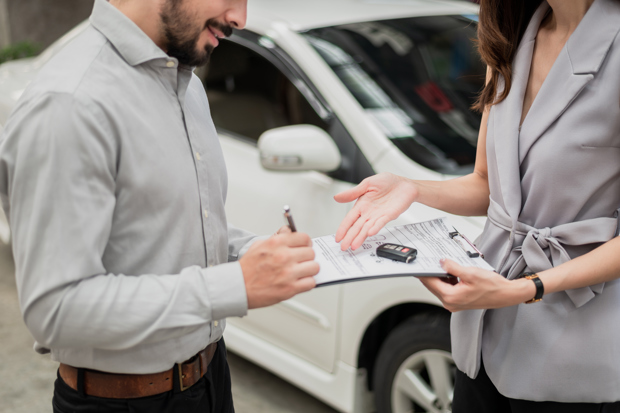
If there’s one guaranteed way to sell your car, it’s to use an online car buying service. There are several to choose from, the most well known are WeBuyAnyCar and wewantanycar, but they all operate in a similar way.
You have to remember these companies operate on slim margins, so they offer the lowest possible price for your car and then sell it on quickly, often through an auction to trade buyers. This means you can end up with a price less than you would get if you part-exchanged the car.
Most online car buying websites ask you to type in your car’s registration and valuation is produced based on the car being in good condition. You then arrange to take the car to the company’s nearest site for an inspection.
More often than not, this will result in the original quote being reduced due to some fault being spotted on the car. In many cases, the eventual price offered is 10% less than the original online quote and some companies also charge an administration fee.
You need to take your car’s documents and some form of identity for yourself to the valuation appointment. If you agree to sell the car, the deal can be completed there and then. The money will then be paid directly into your bank account.
If you have the car on finance - such as HP or a PCP - you can still sell it. You'll need the settlement figure, but often the person dealing with the purchase will be able to contact your finance company when you're on site with the car, making it very straightforward
The upside to accepting a lower price for your car is the speed of these services. If you need to sell your car quickly, they are ideal and give you ready cash to buy another car.
In our personal experience of selling cars, you will get more money by using motorway.co.uk where you can also see what dealers will offer you directly.

You may also like
- Compare the best car buying sites to get the highest price
- Get an accurate 2026 car valuation in 30 seconds
- Avoid a lemon: 10 essential tips for buying a used car

Motorway*
Motorway* is one of the UK's most popular sites for selling your car online. Simply enter your car’s registration number and mileage to sell your car to a verified dealer, often for a better price than part exchange.
Motorway connects your car with the best offer from an exclusive network of 5000+ verified dealers and professional buyers.
By selling directly to a verified dealer, you cut out the middlemen and could get more than through other selling routes. Motorway is completely free to use if you’re selling your car.
Are there any transaction fees?
Motorway* is free to use and there are never any charges to sell via Motorway's exclusive dealer network.
Trading-in vs. cash sale: should you sell your car to a dealer?
Unless the car is highly sought-after and selling for more than the market value, this is a desperation tactic.
If the car is relatively ordinary and the dealer wants stock, he has to build in a margin on top of whatever he offers you. This has to include his own insurance and checking that the car doesn't have some secret history that HPI doesn't show.
If your car is over the age of the dealer's stock, then the dealership may not make you an offer, but one of its salesmen might. These sort of offers are often derisory. Years ago a reader was offered just £1000 for an immaculate 50,000-mile BMW 3 Series Convertible.
We told the reader to do what the salesman was planning to do with it. Advertise it for £4000 and be prepared to accept up to £500 less. He did and got £3750.
Is a car auction right for you? Pros, cons and reserve prices
If you’re in a hurry to sell, the traditional car auction is a good bet. It’s quick, easy and you pay around a 5% fee of the selling price to the auction firm. The downside is you’ll get a rock-bottom price as most auctions are populated be dealers looking to stock their forecourts.
Ordinary cars sold this way usually fetch no more than trade price, less the auction house entry fee and less commission.
Top end cars may or may not sell to a member of the public, but they usually need a bit of 'encouraging' to fetch top money - either from Joe Public or from a franchised dealer attending the auction who has an order for precisely that car.
Specialist cars in high demand and short supply will achieve what the people in the auction house that day are prepared to pay. 'Top Car' sales are often used by specialists who deal in such cars to test market price levels so they know what to pay and what to sell for.
Executors who have classic cars to dispose of as part of the deceased's estate will usually get a better price selling at auction than they will from any dealer.
Is a private car sale right for you? Pros and cons explained
The prime reason for selling your car privately is to give you more cash towards the next purchase. It takes a little more effort on the part of the seller to make a private sale, but for many it’s worth it.
The pros are that you're likely to get a better price than a part-exchange from a dealer. A private sale can net you up to 15% more than a trade-in to give you more cash towards your next car.
So if you’re not in a rush to buy another car, a private sale makes sense.
However, the cons are that it can take longer to sell. You have to arrange the adverts for the car and be at home when potential buyers want to look at the car. And not everyone is happy to haggle over price - it can be an awkward situation if you're not used to it.
You have to prepare the car for sale to get the best price and also be wary of scams and dodgy buyers. And you’ll receive calls from dealers making very low offers....
Best places to advertise your car: Facebook, AutoTrader and eBay compared
Finding the right place to sell your car privately has never been easier. With so much choice, it pays to narrow down a few outlets where you will get the best response and price.
Online
This is by far the most common way to advertise a used car for sale. Online offers the widest audience and many buyers are prepared to travel the length of the country for the right car. There are lots of sites with Auto Trader being by far the biggest, plus the likes of eBay and Facebook Marketplace.
If you have a specialist car like a classic or high performance vehicle, advertise it on an enthusiast site where more possible buyers are likely to see it. Most of these sites charge a flat fee for an advert that will appear for a set number of weeks but others such as carandclassic are free.
Social media
More sellers are now using their social media feeds to advertise a car for sale to friends and acquaintances. You can also join online groups and forums relevant to your make and model to find potential buyers.
Local newspaper
The local paper is still a good way to advertise used cars, particularly ones at the cheaper end of the scale. Often, these adverts are free or very cheap, though they may only run for one or two editions of the paper, so you’ll need to renew the ad if the car doesn’t sell promptly.
Local ads
Putting up an advert in the local newsagent or supermarket can yield good results. It works well with cheap cars and ones that are suited to your area, so a 4x4 will find a ready market in a rural area whereas a small hatch will be popular in a city.
Sign in the car window
Don’t dismiss the idea of putting a sign in the window of your car. It’s not the most reliable method of selling a used car, but it can alert an interested buyer who might not otherwise be aware your car is available. For rarer cars, like classics and higher performance motors, this tactic works well at vehicle shows where enthusiasts gather.
Safe car viewings: how to manage buyers and test drives
Hurrah, someone wants to see your car. That’s one of the major hurdles out of the way, but you need to keep a cool head and your wits about you to stay safe and get a good deal.
When the potential buyer gets in touch, ask for their name, address and a contact telephone number. This is in case you sell the car in the intervening period and can let them know the car has been sold. Any genuine buyer will agree to this. Never give out the car’s VIN (Vehicle Identification Number) before a buyer arrives as they may be a criminal looking to clone your car to use on a stolen vehicle.
Agree to meet the buyer at your home address. Do not meet anywhere you feel unsafe or vulnerable. Take a note of the buyer’s car details, including the registration number. It’s also a good idea to have a friend or family member present for support, even if they don’t know anything about car.
Let the buyer look over the car for as long as they want, but don’t ever leave them with the keys or with the keys in the ignition. Always keep the keys in your possession. Don’t leave the seller alone with the car in case it’s damaged and they deny liability.
The test drive
Most buyers will want to test drive the car. Ask to see proof of their insurance so you know they have third party cover. If they don’t, insist you will drive and take your friend or family member along too. Always take your mobile phone with you on any test drive.
At the beginning of the test drive or when you swap drivers, never leave the keys in the ignition. Take them out and only hand them to the buyer when you are sat in the passenger seat.
Allow the buyer to drive the car on a variety of roads for a reasonable period, but stay relatively close to your home.
Let the buyer look at all of the documents for the car, but don’t let them take any away or take pictures on their mobile phone – only criminals will want to do this to clone your car.
Answer any questions honestly, but don’t offer extra information. It’s the buyer’s responsibility to check the car is what they want. However, you cannot misrepresent the vehicle or hide any faults you know make the car unroadworthy as this is a criminal offence.
Negotiating on the price
Most used car buyers will want a discount on the price you’ve asked for, so be prepared to haggle. If you’ve got your research right when you advertised the car, there will be some room for negotiation. However, remember the car belongs to you and it’s only you who can decide how much you’re happy to sell it for.
Have a figure in your mind that you are not willing to go below. But be realistic about the car’s value - do your research on similar cars so you know what they sell for.
Always be polite. Even if a potential buyer makes a ridiculously low offer, simply state that’s not going to be nearly enough to seal the deal. Some buyers work on the basis that you’ll be desperate to sell the car and buy another, but hold your ground. Be ready to drop the price by small increments till you and the buyer arrive at a price you’re both happy with.
When you agree on a price, put it in writing on a receipt that both you and the buyer sign as proof. It’s normal to take a non-refundable deposit of around £100 at this point if the buyer is not paying in full there and then.
If the buyer tries to re-negotiate the price afterwards or when they come to collect the car, say no and stick to the original deal.

Secure payments: Accepting bank transfers and avoiding car scams
Getting paid for your car is the whole reason you put it up for sale in the first place. Making sure the money comes to you safely and securely isn’t tricky, but it does require some planning on your part. Here are the different methods of payment and what you need to be aware of.
Cash
This is the time-honoured way to pay for a used car because it’s instant for both parties. This makes it very convenient, but it’s also open to fraud with fake notes. If a buyer wants to pay cash, ask them to hand it over at a local bank where it can be counted and checked that it’s genuine. An honest buyer will have no problem with this, but don’t hand over the car keys and documents until the money is in your account.
Bank transfer
This is the safest way to transfer money between the buyer’s and seller’s bank accounts. It can be completed online quickly and the transfer is instant, so it saves carrying a wad of cash and once the money has been transferred it cannot be reclaimed by the buyer. As with all such dealings, only give the buyer your bank account and sort code numbers as they are that’s needed to make this type of transfer. When the money appears in your account, it’s safe to hand over the keys and car documents.
Cheque
A cheque is an easy way to pay as it saves carrying bundles of cash and it can be made out to an exact amount. When a buyer opts to pay by cheque, they must be prepared to wait until it has cleared in your bank account, so you know the money has been paid. Only then should you hand over the car’s keys and documents. Criminals will use fake or stolen cheque books to buy used cars that they can then sell on for hard cash.
PayPal
PayPal is a simple and quick way to pay for items bought online, particularly through eBay. Some buyers might offer to pay some or all of the agreed price for a used car via PayPal. The drawback is that cars are not covered by PayPal’s own buyer or seller protection scheme, so you have no safety net if there’s a problem with payment. Also, some buyers might lodge a complaint against you that results in a ‘chargeback’ where they try to recoup some of the agreed price from you by claiming the car was not as described. You can dispute this but it takes time and energy, so it’s best to choose another payment method.
Escrow
Escrow acts as a third party in a payment. It holds the money from the buyer and releases it to the seller when all the terms of the agreement have been met. It’s unusual to use this when buying a car as it’s more commonly used for larger deals or if the buyer is based overseas. Also, you only get paid when the car has been delivered to the buyer, so the seller takes a greater risk. Check any Escrow company is registered with the Financial Conduct Authority.
How to cancel car tax and insurance: Get your refund and avoid fines
Even if you're car is parked up on your drive with a 'For Sale' sign in the window, it must, by law, be either taxed and insured or put on a SORN - a Statutory Off Road Notice.
We'd suggest keeping it taxed and insured while you're selling it - potential buyers will likely want to test drive the car (check they are insured to do so) and it covers it if it's stolen or damaged. Be aware that while the vehicle is in your charge, it is an offence to allow someone the use of the vehicle if it is uninsured.
Once you've sold the car, you need to tell the DVLA. You'll get a refund of any outstanding tax. The new owner is responsible for taxing the car and organising insurance before they drive it.
When you’ve agreed on a price, never hand over the car keys until you’ve been fully paid and you’re sure the money is genuine.
When the sale is complete, you must send off the Change of Ownership section of the V5C registration document (although it's much quicker and easier to do it online). Give Section 10 of the V5C to the new owner. You must also inform your insurance company that you’ve sold the car and you can also now reclaim any outstanding road tax (Vehicle Excise Duty).
Private seller legal rights: your responsibilities under UK law
There is very little legislation that deals with selling a car privately. However, there are some laws that you must abide by to make sure you’re all legal and above board.
The first is to describe the car honestly and accurately in any advert or dealings with a buyer. If you’re not completely straight, you could be breaking the Misrepresentation Act. This states:
- You have the legal right to sell the car
- The vehicle matches your description
- The vehicle is roadworthy
You must own the car outright to be able to sell it, so it cannot be subject to finance. If there’s a loan to be paid off, you must tell the loan company and arrange to settle the debt either before selling or as part of the deal.
If there’s a problem with the car after you sell it, the buyer can claim it was misrepresented to them. They could also claim this was ‘fraudulent’ if they think you knew about the problem but didn’t declare it.
The burden is in the buyer to ask as many questions as possible to establish the car is right for them. As the seller, you must answer truthfully, but you don’t have to provide any additional information. Keep it simple and honest and you’ll be fine.
Car selling FAQs: 2026 expert advice
Can I sell a car with outstanding finance in 2026?
Technically, no - the finance company is the legal owner of the vehicle until the final payment is made. However, you can sell the car provided you settle the debt as part of the transaction. You must first request a Settlement Figure from your lender (usually valid for 28 days). Most online buying services like Motorway or webuyanycar will pay the lender directly on your behalf and give you the remaining balance. If selling privately, it is best to call the lender with the buyer present to settle the balance immediately.
What paperwork do I need to sell my car privately?
To complete a legal and professional sale in 2026, you should have the following ready:
- V5C Logbook: The most vital document for transferring ownership (can now be done via the DVLA website in minutes).
- Service history: A stamped book or digital records significantly increase resale value.
- Current MoT: While you can sell a car without one, it must be towed away and cannot be test-driven.
- Proof of purchase/receipts: Create two copies of a "Sold as Seen" receipt signed by both parties.
- Insurance repair records: Disclosure of previous work builds trust and protects you from future liability.
Is it safer to accept cash or a bank transfer?
In 2026, a Faster Payments bank transfer is the gold standard for security. It is traceable and usually instant. Avoid taking large sums of cash due to the risk of counterfeit notes; if you must accept cash, meet the buyer at a bank so the teller can verify and deposit the funds immediately. Never hand over the keys until you see the "Funds Cleared" status in your own banking app—do not rely on a screenshot from the buyer’s phone.
How do I notify the DVLA that I’ve sold my car?
The fastest way is through the DVLA’s online portal. You will need the 11-digit reference number from your V5C logbook. Once submitted, the transfer is instantaneous, and any outstanding car tax will be automatically refunded to you via cheque or direct debit within 6 weeks. Informing the DVLA immediately is crucial to avoid being held liable for any fines or offences committed by the new owner.
Can I sell my car if it has no MoT?
Yes, it is legal to sell a car without a valid MoT, but you must disclose this in the advert. The main hurdle is that the car cannot be legally driven on public roads - not even for a test drive. You must ensure the buyer collects the vehicle via a trailer or recovery truck. Because of the hassle and the risk of unknown mechanical issues, No MoT cars typically fetch 20–30% less than roadworthy equivalents.
What should I do with my insurance after the sale?
You should contact your insurer the moment the car is sold. You generally have three options:
- Transfer the policy to your new vehicle (usually involving a small admin fee).
- Cancel the policy to receive a pro-rata refund for unused months.
- Suspend the cover if you haven't bought a replacement yet. Warning: Never leave your insurance active "as a favour" for the new owner. If they have an accident before taking out their own policy, your insurer may be legally liable, which could invalidate your future cover and cost you your No Claims Bonus.
