
Buying a used car: The complete checklist for 2026
Content guide
- Buying a used car: what you need to know
- When is the best time to buy?
- Buying from a main dealer
- What's an approved used car?
- Is buying online safe?
- Buying from an independent dealer
- Car supermarkets
- Is it wise to buy from a home trader?
- Buying a used car privately
- Your rights as a buyer
Buying a used car need not be a minefield if you know what the pitfalls are and how to avoid them. We think finding your next car should be an enjoyable and simple experience.
There are two golden rules for buying a used car.
The first is to be open-minded. Obviously you'll have a budget and a good idea of what you want. But if something else crops up in top-notch condition at a bargain price you'd be a fool to ignore it.
The second rule is to trust your instincts. If a gut feeling tells you there is something not quite right about the car or the seller, walk away. Don't be browbeaten into buying something you don't want.
You may also like
- Find a used car for sale
- Buying a car at auction: a complete guide
- How to reject a car
- Where to get a free car history check
Buying a used car - what you need to know
Buying a used car need not be a minefield if you know what the pitfalls are and how to avoid them. We think finding your next car should be an enjoyable and simple experience. These are our top tips.
First impressions are important
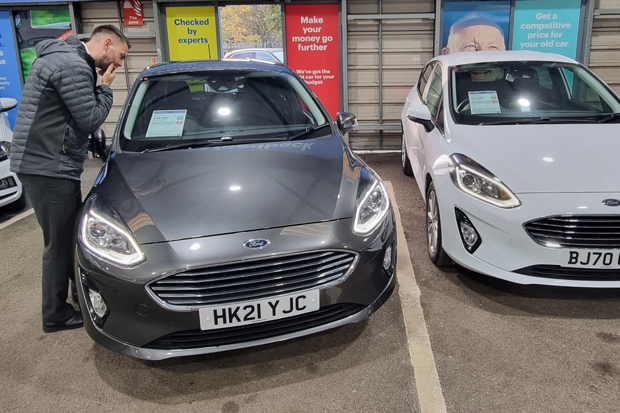
Always trust your first impressions when you go to view a car. If the dealership cannot be bothered to clean the car and present it properly, then they will likely have the same attitude to servicing and maintenance. If there are any warning lights on the dash, walk away. Never get taken in by the 'we'll sort that out' line...
It's not just the car itself, it's the dealership and the salesman. If your gut is telling you no for whatever reason, walk away. Remember, if anything goes wrong with the car, these are the people you will be dealing with.
Check online reviews
Before you book a viewing, check online reviews of the dealer you're going to visit. Bigger dealers are usually on TrustPilot while the likes of Autotrader will show ratings and reviews of a dealer next to each car. If there are too many negative reviews, move on.
Is it a good price?
So many things affect used car values and you’re unlikely to find two identical models for exactly the same price. One of the best ways to get an idea of what you should pay is to search classified adverts for the type of car you want. Check out our Cars For Sale. Even if you’re not ready to buy the car, it’s a good way of working out how much it will realistically cost.
You can also use our Honest Used Car Prices which will give you an idea of how much to pay for a particular model.
Check the history
An HPI check will show if there is a loan or any outstanding finance against the car. Remember, it's illegal for someone to sell a car that has outstanding finance on it.
You can find the basics of a used car’s past without paying for a check, though. Examine the car’s service history (if it has one) and check its identity with the DVLA, its MoT history and whether or not it has been recalled.
Get an inspection
If you're not sure about a car then get a professional to look at the car for you. Any legitimate private seller will have no problem with a buyer having the car inspected by a professional. Prices vary but usually start at around £150 and you can ensure - as far as possible - that the car you’re buying is sound. Organisations like the RAC and AA offer vehicle inspections.
Take a test drive but check you're insured
A test drive is always worthwhile. Dealers should have demonstrators’ insurance that covers you for this but you should still ask about it beforehand. For private sales, contact your insurance company to see if you’re legally covered for a test drive.
Check all the paperwork
Don’t hand over the cash until you’re satisfied you have all the relevant paperwork and extras. The V5C or logbook is the most important document because it identifies the owner of the car. You'll need proof of an MoT plus the service history and vehicle handbook are well worth having, too.
Check for major service intervals and do your homework. Some cars for example, need a cambelt every four years, so check that you're not being sold a car that's going to cost another £750 in the near future.
Don't forget to tax and insure it
Used cars have not been sold with valid road tax since the demise of the tax disc in 2014, so you’ll need to buy tax before you drive the car anywhere.
You will also need to make sure it has a current MoT and most importantly, get it insured. This can all be done online or over the phone, but it's your responsibility as the new registered keeper to get it sorted before you jump in a drive off.
When is the best time to buy a used car?
The best time to buy a used car is usually November or February.
The September plate change feeds a large number of used cars to the market. Unless these cars get sold in September or early October (just six short weeks), they tend to sit around and depreciate.
Any leftovers tend to be at rock bottom by November, which is when the well-financed dealers stock up for the new year. Lesser dealers see this happening and start buying in December, too, so prices can rise again by Christmas.
In January, we no longer see a large influx of part-exchanges. However, if the weather is okay there can be strong demand for used cars. So prices shoot up until the market slows a bit in mid-February in anticipation of the March part-exchanges.
Buying from a main dealer
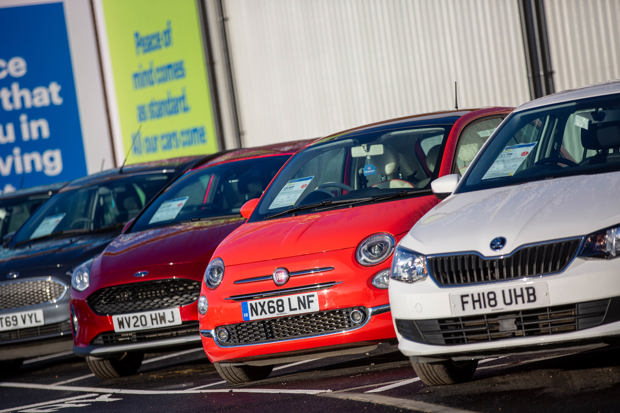
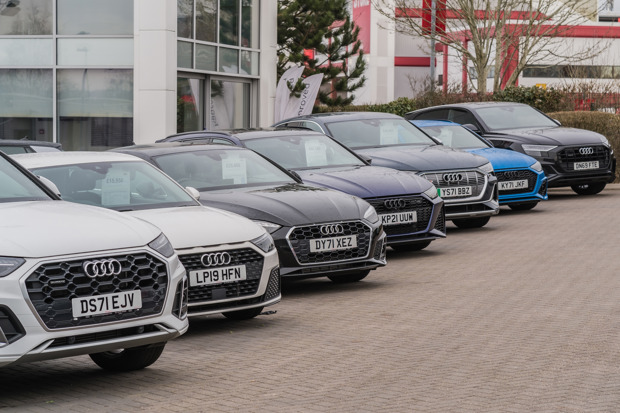
For many, a main dealer (also referred to as a franchised dealer) is the first port of call if you're buying a nearly new or approved used car. But it's not always easy to get a good discount - especially on an in-demand model.
On the premise that between 3% and 5% profit is better than no profit at all - and the car is in stock - many dealers will play ball when it comes to negotiating on price, particularly towards the end of a month. Don't be fooled by the 'that's the lowest I can go' line.
Of course you are paying more for buying for a dealer - but then you are getting more. Buying from a main dealer means the car should be an pproved used model giving you useful extras - typically a 12 month warranty and 12 months roadside assistance along with things such as MoT Cover.
In theory, main dealers should offer top notch customer service should anything go wrong, but sadly, that's not always the case. This is where the likes of Trustpilot come in. We always urge buyers to search for online reviews of dealers before committing.
What's an approved used car?
Most main dealers offer approved used car schemes such as Ford Approved or Spoticar which includes Vauxhall, Peugeot and Citroen. Where the warranty is backed by the manufacturer rather than being simply an insured warranty, these give peace of mind but can come at a fairly high price.
Nevertheless, once you've shopped around a bit and got the feel of prices at car supermarkets, it's worth paying the franchised dealers a visit. They have been known to beat big car supermarket prices - and if their prices - inclusive of a cast-iron warranty, are only a few hundred more than the supermarkets, you may be better off doing a deal with the franchised dealer.
Where you want to part-exchange your old car, franchised dealers almost always give better part-exchange allowances than the car supermarkets. But here you need to compare the total 'cost to switch', not merely the part-exchange allowance offered.
Is buying a used car online safe?
Buying a car online is becoming increasingly popular these days, especially since the days of Covid when the majority of dealers moved to some sort of online sales offering.
Most manufacturers and dealers offer an online sales service and delivery is usually included as part of the deal. This means you can buy the car you want and have it delivered to your door, without having to leave the comfort of your sofa.
It's not for everyone of course. Like many people, we prefer to see a car in person before committing to buy, no matter how much it costs. After all, photos online can be deceptive. But with online sales increasing, it's becoming more popular, especially for distance sales.
Finding a new or used car online is straightforward with dealers and online marketplaces such as our sister site heycar.com allowing you to filter your search by price, age, fuel type, gearbox and mileage among others.
You'll then be presented with a list of vehicles that meet your requirements. Once you've found the car you want simply hit the 'buy online' button to get the purchase process started.
Regardless if you buy outright or via finance, you'll most likely be asked to place a small deposit to secure the car. You'll then be asked to provide some details and emailed some forms to start the application for car finance, should you decide to fund the purchase via a PCP agreement.
Once the forms have been filled in and approved, you'll be given a delivery date for your new purchase - this will usually be between 10 - 15 days but can be sooner.
The Pros
- It's stress free. Buying online is perfect for car buyers who know exactly what they want. Online sales are also a good alternative for people who are uncomfortable with the showroom environment or pushy sales people who may try to pressure you into a sale.
- You can return the car. Online car sales are protected by the Consumer Contracts Regulations (2013) which gives you a 14-day cooling-off’ period. This means you can reject the vehicle for a full refund with no questions asked. Unlike the 2015 Consumer Rights Act, the car doesn't need to be faulty.
Most dealers and manufacturers will give you the option to trade-in your existing car, although you may get a better price by selling it privately or using an online car buying service. If you do decide to part-exchange your car then you'll be asked to provide some basic details before being given an online valuation.
The Cons
- You have to be wary. Be careful if you are buying a car online from a private or unknown dealer. Scammers can easily produce professional-looking websites that will have the appearance of a respectable dealership. If the prices look too good to be true or you are suspicious then visit the showroom in person to confirm the business and the cars for sale are legitimate.
- You can't have a test drive. Buying online will not give you the option of a test drive. And the 14-day cooling off period will have some strict conditions, which means you may be charged if you damage the vehicle or exceed 100 miles during the trial ownership period.
Remember, if you cancel the order for another vehicle or a full refund then you may also need to cancel or change the finance agreement. This may need to be done separately and via the company that is providing the vehicle finance.
Buying from an independent dealer
There are thousands of used car dealers spread across the UK and many of these independent companies offer good cars at keen prices. However, there are some that are less interested in a good deal and customer service. Question is, how do you spot a bad one and avoid being ripped off?
It’s not unusual for dealers to only have a mobile phone number now, but make sure you view the car at the dealer’s premises. If they ask you to look at the car at their home or in a car park, alarm bells should be ringing to make you look elsewhere.
Before you visit the dealer, check online for reviews and see if they have their own website. It’s also a chance to check if they are accredited by the British Independent Motor Traders Association, SMMT, AA, RAC, Motor Codes or Scottish Motor Traders Association.
While membership of any of these schemes doesn’t guarantee good service, it gives you somewhere to complain to in the event of a bad experience.
Ahead of looking at a car, carry out a vehicle history check using the registration number. Most dealers will advertise they have already carried this out, but it’s better to make your own check to be sure a car hasn’t been written off, stolen or is subject to outstanding finance.
You should also check the car’s MoT history prior to visiting. This will give a good idea of what work has been carried out and if the mileage correlates to that shown in the advert and on the car’s odometer.
Take a test drive that lasts around half an hour and drive on the type of roads you will normally use. An honest dealer will be happy to do this. If any faults show up during the test drive, ask about how they will be fixed. Honest dealers will solve any problems within the asking price.
When you’re happy with the car you’re considering buying, it’s best to pay by credit card or bank transfer rather than cash or cheque. Some dealers will try to charge a fee or percentage for paying by credit card. If so, use the credit card to make a small deposit payment as this give you greater protection if there’s a problem further down the line.
Make sure the car comes with all documentation before you sign on the dotted line. If the dealer says he’ll send on the vehicle’s service history, insist it comes with the car before you pay for it.
An honest dealer will be happy to put a car through an MoT test so it’s sold with 12 months’ ticket when you collect it. If the dealer refuses to do this, it should sound alarm bells.
Buying from a car supermarket
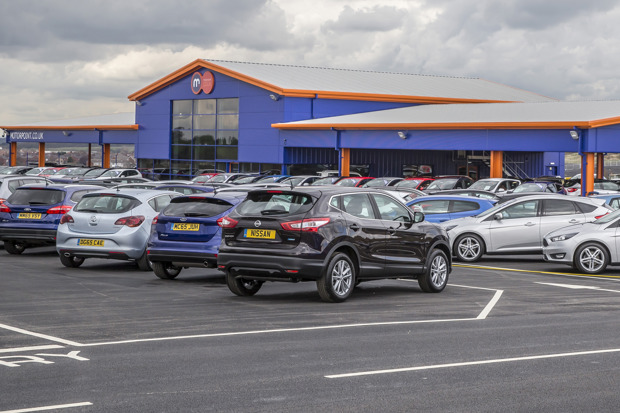
Car supermarkets live up to their name by offering more vehicles and choice than traditional used car dealers. There are also plenty of them spread around the UK, so you should never be too far away from one when you’re thinking of changing car.
The pros
- Lots of choice. Most will have a large number of the most popular makes and models
- Competitive prices. They often sell cars at lower prices compared to an equivalent car from a franchised dealer.
- Newer cars. Most car supermarkets only sell relatively new cars up to around three or four years old.
Most cars at car supermarkets are ex-rental or former company fleet cars, so they also have a complete service history. All the cars on display are generally ready to use straight away, so you can buy and drive off in your new car the same day.
A refundable deposit can secure a car to view before you arrive and a part-exchange price can be given on the spot while you browse and the deal arranged on the same day. Finances deals can also be arranged while you wait, so you can drive off in your new car all in a single day.
The cons
- Non negotiable prices. The advertised prices are usually non-negotiable, so what you see is what you pay. The trade-in price for your old car will be rock bottom too.
- High pressure sales. You will often find high pressure sales staff who will try to get you to agree a deal when you visit. Many people find this uncomfortable.
- Limited finance deals. Finance deals are often not as keen as others from independent lenders on the high street or online. Carefully check the APR rate and ask for a full breakdown of costs and duration of the finance deal.
The cars on display are often only prepared to a superficial standard, so check carefully for scratches, scuffs and dents. And insist any remedial work is completed within the agreed sale price. The aftermarket warranty is usually limited in how much it covers.
Buying from a car supermarket means you will have minimal aftersales back-up. You have to be very insistent to have any problems fixed after you’ve driven away in the car.
If you're after a very specific car, a rare model or a performance car, you're unlikely to find it at a car supermarket. Here, it's all about volume so the cars for sale will tend to be the most popular models.
Buying a car from an auction
If you’re looking for a bargain, buying from a car auction can seem very tempting. However, it iss not without risks.
While cars sold at auction are generally substantially cheaper than those sold at retail - you can save as much as 50% on a used purchase – you don't have any of the warranty or consumer protection you get when buying from a dealer. Read our full guide on car auctions to find out more.
Is it safe to buy from a 'home trader'?
These people are much maligned, but a proper trader who openly trades from a home of his own is bound by all the same consumer rights laws as a dealer with large, expensive premises. He'll be watched fairly carefully by the local Trading Standards Office. The only way he can make an honest living is by offering deals that beat those on offer from the big boys.
That 'home of his own' bit is important. If he's operating from rented accommodation you may have no comeback against him.
Make sure he invites you into the house (to make sure it really is his house). And if he's the least bit aggressive, shifty, bad tempered or has a vicious looking dog on a chain, make a polite excuse and be on your way.
Never buy a car in a car park or a lay-by, or from a dealer working from a mobile phone number who brings the car round to your house. Always make a history and finance check on cars offered by home traders, and look for verification that the mileage is genuine.
For this purpose, a car's computerised service history print-out is a far better bet than a lot of stamps in a service book. Again, go with your instinct. If it seems too good to be true, something is probably amiss...
Buying a used car privately
The benefit of buying privately are lower prices than at a dealer’s and some buyers prefer the less pressured environment. But there's little protection if something goes wrong.
Hence it's crucial to do your research. If the price looks too good to be true, it probably is. Some criminals will advertise a car that doesn’t exist to collect deposits and then disappear. This is common on Facebook Marketplace. Cars priced below the market value may also be stolen or ‘cloned’ where they are given the identity of another vehicle that’s legitimate.
Carry out a vehicle history check before going to view a private sale. You’ll need the registration number for this and it will tell you if the car is stolen, written off or has outstanding finance.
Only ever view a car at the seller’s house and make sure their address matches that on the car’s registration document. Unscrupulous sellers will give all sorts of reasons why the two don’t match or they want to meet in a car park. However, honest sellers will see you at their home.
Arrange to see the car in daylight rather than at night when you might miss damage to the car. If it’s raining, ask to drive the car to a filling station forecourt where you can inspect it in the dry as water can hide bodywork faults.
If you’re not confident about assessing the condition of the car, the AA, RAC and others will carry out an inspection for you for a fee. Scrutinise all of the paperwork with the car. A full service record and folder with receipts from reputable garages is always a good sign. Make sure the mileage corresponds to the car and its condition.
Also, check the vehicle registration and Vehicle Identification Number (VIN) tally with the documents. When checking the VIN, make sure it’s stamped into the car’s metalwork or on a fixed plate rather than a sticker that’s easy to falsify.
If you want a test drive, make sure you’re covered on your own insurance policy. Alternatively, you can arrange a single day’s cover. If you don’t have insurance, you’re breaking the law.
If the inspection and paperwork all check out, it’s time to make an offer. Don’t be afraid to offer less than the seller is asking as they will have factored in some room for negotiation. Having checked out others similar cars, you should have a good idea of what they are selling for. When you agree on a price, you can pay a small deposit or the full amount, but get a receipt from the seller.
If the car needs any work before you buy it, agree this with the seller in writing in case there’s any dispute further down the line.
When paying, cash is the easiest, but a bank transfer is safer and more cautious sellers may ask for this than risk a fist full of dodgy notes. Don’t be offended by this approach.
If a fault develops with the car within the first 30 days of buying it, you may be covered under the Misrepresentation Act. This states the car must be as described. If it’s not, you can claim the difference between what you paid and what the car is really worth. You may also be able to claim for any repairs or losses as a result of problems with the car.
Have a car to part-exchange?
If you have a car you want to part-exchange for a new one, it's no good getting a decent discount then giving it all back by accepting too little for your trade-in.
Be well aware of what your existing car is worth. Compare it with similar models of similar age and mileage that the dealer has for sale. You can use a variety of valuation tools but be aware that most dealers use CAP.
Our used car pricing tool will give you valuations for whether you're buying, selling or part exchanging as a guide. Dealers will of course offer you less as they have to factor in a profit margin.
However, what you get for your part-exchange is not the most important factor. The 'cost to switch' is. Compare the total financial outlay involved in one deal compared to another.
Your rights as a buyer
Problems can arise with cars after you buy them. How much legal protection you have if there’s a dispute comes down to where you bought the car from.
If you bought your car from a dealer, whether that was a franchised or independent outlet, you’re covered by the Consumer Rights Act 2015. This states that goods must be ‘of a satisfactory quality’, ‘fit for purpose’ and ‘as described’.
With a used car, this means it must be in a satisfactory quality for its age and mileage. If you bought the car online, this law still applies and you’re also covered by Distance Selling Regulations that give you the right to cancel the sale within seven working days and receive a full refund inside of 30 days.
When buying a used car privately, you have much more limited protection. The seller must have the right to sell it, which means it’s not stolen or subject to finance.
